The uterus is one of the most remarkable organs in the female reproductive system. It is responsible for menstruation, pregnancy, childbirth, and plays an important role in hormonal health. However, the uterus is not the same throughout life. From childhood to menopause and beyond, it continuously changes in size, shape, function, and strength under the influence of hormones and aging.
Understanding how the uterus changes during life can help women recognize what is normal and when medical advice may be needed. This guide explains the major stages of uterine development and the factors that influence its health.
The Uterus Before Puberty
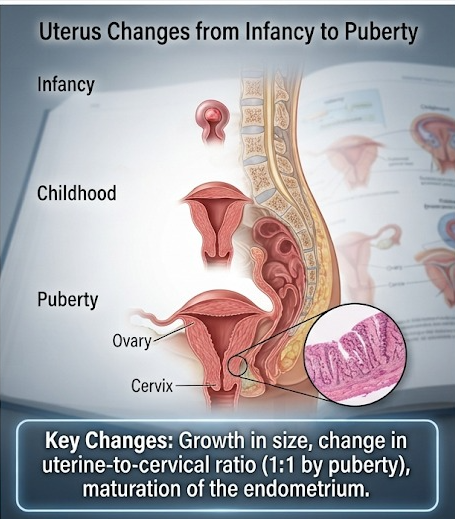
During infancy and childhood, the uterus is small and relatively inactive because reproductive hormones are present only at very low levels. At birth, the uterus is approximately 3–4 centimeters long, and the cervix is larger than the uterine body.
As a girl grows, the uterus develops slowly. Since estrogen production is minimal before puberty, there are very few structural changes. Menstruation does not occur, and the lining of the uterus remains thin because ovulation has not yet begun.
At this stage, the uterus mainly prepares for future reproductive function rather than performing it.
Changes During Puberty
Puberty marks one of the most significant periods of uterine growth. Rising levels of estrogen stimulate rapid development of the reproductive organs.
The uterus increases in both size and weight, while the body of the uterus becomes larger than the cervix. The endometrial lining also begins to thicken and shed regularly, leading to the first menstrual period (menarche).
During adolescence, menstrual cycles may initially be irregular as hormone levels stabilize. Over time, the uterus establishes a regular cycle of building and shedding its lining every month.
The Uterus During Reproductive Years
The reproductive years, typically between the late teens and early forties, represent the uterus at its healthiest and most active stage.
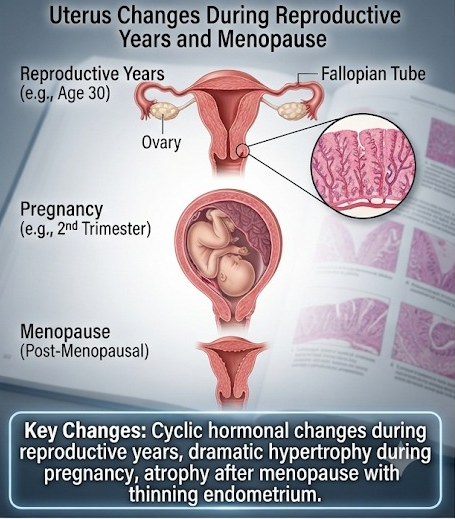
Each month, hormones prepare the uterine lining for a possible pregnancy. If fertilization does not occur, the lining is shed during menstruation.
When pregnancy occurs, the uterus undergoes extraordinary changes. To make room for the developing baby, placenta, and amniotic fluid, it grows from the size of a tiny pear. During the final stages of pregnancy, the uterus may increase its capacity by hundreds of times compared to its original size.
After childbirth, the uterus gradually returns close to its pre-pregnancy size in a process known as uterine involution, although multiple pregnancies may cause permanent structural changes.
Changes During Pregnancy
Pregnancy transforms the uterus more dramatically than any other stage of life.
The muscular wall thickens to support fetal growth, while increased blood flow nourishes both the mother and developing baby. Specialized tissues form to support the placenta, ensuring proper oxygen and nutrient delivery.
After delivery, hormonal changes trigger the uterus to contract, helping reduce bleeding and restore its normal shape over several weeks.
Changes During Perimenopause
Perimenopause is the transitional period before menopause when estrogen and progesterone levels begin to fluctuate.
These hormonal shifts often cause noticeable changes in the uterus, including:
- Irregular menstrual cycles
- Variations in the uterine lining’s thickness
- Heavier or lighter menstrual bleeding
- Increased likelihood of fibroids or polyps
Some women experience pelvic discomfort or abnormal bleeding during this phase. Regular gynecological checkups become increasingly important to distinguish normal hormonal changes from medical conditions requiring treatment.
The Uterus After Menopause
Menopause officially begins after twelve consecutive months without a menstrual period. As estrogen levels decline significantly, the uterus gradually becomes smaller and lighter.
The uterine lining remains thin because monthly hormonal stimulation has stopped. Since menstruation no longer occurs, the uterus enters a resting phase.
Although reproductive function ends, maintaining uterine health remains important. Any vaginal bleeding after menopause should always be evaluated by a healthcare professional, as it may indicate an underlying condition that requires investigation.
Factors That Affect Uterine Health
Several lifestyle and medical factors influence how the uterus changes throughout life. These include hormonal balance, genetics, body weight, nutrition, physical activity, pregnancy history, and underlying conditions such as fibroids, endometriosis, or adenomyosis.
Maintaining a healthy diet, exercising regularly, avoiding smoking, managing stress, and attending routine gynecological examinations can support long-term uterine health.
Early diagnosis of abnormalities often leads to more effective treatment and better overall reproductive wellness.
When to See a Doctor
While many uterine changes are completely normal, certain symptoms should never be ignored. Seek medical advice if you experience persistent pelvic pain, unusually heavy menstrual bleeding, bleeding after menopause, severe menstrual cramps, or unexplained pelvic pressure.
Prompt evaluation can help identify infections, hormonal disorders, fibroids, or other reproductive conditions before they become more serious.
The uterus changes continuously throughout a woman’s life, adapting to different hormonal and reproductive stages. From childhood and puberty to pregnancy, menopause, and later years, each phase brings natural structural and functional transformations.
Understanding how the uterus changes during life empowers women to recognize normal development, maintain reproductive health, and seek medical care when necessary. With regular health checkups, a balanced lifestyle, and awareness of changing symptoms, women can support uterine health at every stage of life.
Liver Cancer Symptoms Cause and Remedy
Read Also: Medical Website Design