
The female reproductive anatomy is a complex and highly organized system responsible for reproduction, hormonal balance, menstruation, pregnancy, and childbirth. Every organ in the female reproductive system performs a unique function that contributes to overall reproductive health. Knowing how the female reproductive system works enables women to make health-related decisions and understand the value of routine exams.
This article explores the major parts of the female reproductive system and explains their functions in simple, easy-to-understand language.
What Is Female Reproductive Anatomy?
Female reproductive anatomy refers to the internal and external organs involved in reproduction and hormone production. These organs work together to produce eggs (ova), regulate the menstrual cycle, support fertilization, and provide a safe environment for fetal development during pregnancy.
The female reproductive system begins developing before birth and becomes fully functional during puberty.
Main Parts of the Female Reproductive System
The female reproductive system consists of both internal and external organs. Each part has a specific role in maintaining reproductive health.
1. Ovaries
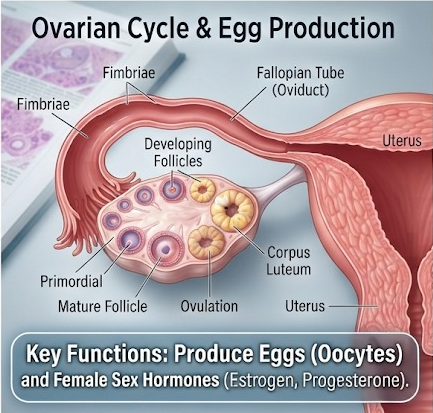
The ovaries are two small, almond-shaped organs located on either side of the uterus. They are one of the most important reproductive organs.
Functions of the ovaries include:
- Producing and releasing eggs during ovulation.
- Secreting the hormones estrogen and progesterone.
- Regulating the menstrual cycle.
- Supporting fertility and pregnancy.
A healthy ovary usually releases one mature egg every month during the reproductive years.
2. Fallopian Tubes
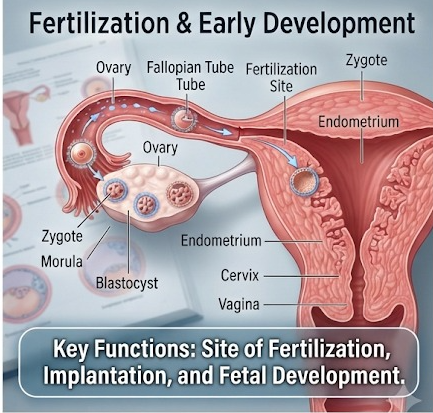
The fallopian tubes are narrow tubes that connect the ovaries to the uterus. They provide the pathway through which the egg travels after ovulation.
Functions of the fallopian tubes include:
- moving the egg into the uterus from the ovary.
- Serving as the usual site of fertilization.
- Moving the fertilized egg toward the uterus for implantation.
Healthy fallopian tubes are essential for natural conception.
3. Uterus
The uterus, commonly called the womb, is a muscular organ where a fertilized egg develops into a baby.
Functions of the uterus include:
- Supporting embryo implantation.
- Nourishing and protecting the developing fetus.
- shedding its lining during the menstrual cycle in the absence of pregnancy.
- Contracting during labor to deliver the baby.
The uterine lining, known as the endometrium, thickens every month in preparation for pregnancy.
4. Cervix
The narrow, lower portion of the uterus that joins it to the vagina is called the cervix.
Functions of the cervix include:
- Allowing menstrual blood to leave the uterus.
- Producing cervical mucus that helps or blocks sperm movement depending on the menstrual cycle.
- Remaining closed during pregnancy to protect the fetus.
- Dilating during childbirth to allow the baby to pass through.
Regular cervical screenings help detect abnormal cell changes early.
5. Vagina
The vagina is a flexible muscular canal connecting the cervix to the outside of the body.
Functions of the vagina include:
- Receiving sperm during sexual intercourse.
- Providing the passage for menstrual flow.
- Serving as the birth canal during delivery.
- Helping maintain a healthy bacterial balance that protects against infections.
Its natural acidity helps prevent harmful microorganisms from growing.
External Female Reproductive Organs
The vulva is the collective term for the external reproductive organs.
They include:
- Labia majora
- Labia minora
- Clitoris
- Vaginal opening
Functions of the External Organs
These structures perform several important functions:
- Protecting internal reproductive organs.
- Supporting sexual pleasure.
- Preventing infections.
- Assisting lubrication during sexual activity.
Proper hygiene helps maintain the health of these external structures.
Hormones and Their Role
Female reproductive anatomy is regulated by hormones produced by the ovaries and the brain.
The primary reproductive hormones include:
- Estrogen: Supports female sexual development, bone health, and menstrual cycle regulation.
- Progesterone: Helps keep the uterus healthy after conception and prepares it for pregnancy.
- Follicle-Stimulating Hormone (FSH): Stimulates egg development.
- Luteinizing Hormone (LH): Triggers ovulation.
These hormones work together to ensure normal reproductive function.
Importance of Maintaining Reproductive Health
Maintaining a healthy reproductive system is important for fertility and overall well-being. Healthy lifestyle habits can reduce the risk of reproductive disorders.
Helpful practices include:
- Eating a balanced diet.
- Exercising regularly.
- Practicing safe sexual health.
- Attending routine gynecological checkups.
- Staying hydrated.
- Avoiding smoking and excessive alcohol consumption.
Early diagnosis of reproductive health issues often leads to more effective treatment.
Common Conditions Affecting Female Reproductive Anatomy
Several medical conditions may affect reproductive organs, including:
- Polycystic Ovary Syndrome (PCOS)
- Endometriosis
- Uterine fibroids
- Ovarian cysts
- Pelvic inflammatory disease (PID)
- Cervical cancer
Recognizing symptoms such as severe pelvic pain, irregular periods, or unusual bleeding is important for timely medical evaluation.
Understanding female reproductive anatomy functions provides valuable insight into how the body supports menstruation, fertility, pregnancy, and hormonal balance. Each organ—from the ovaries and fallopian tubes to the uterus, cervix, and vagina—plays a vital role in reproductive health. Learning about these structures encourages preventive healthcare, early detection of medical conditions, and informed decisions throughout every stage of life. Regular health checkups and healthy lifestyle choices are key to maintaining a strong and healthy reproductive system.
How to Choose the Best Online Courses for Career Advancement
Exploring the Top Scientific Theories That Changed the World