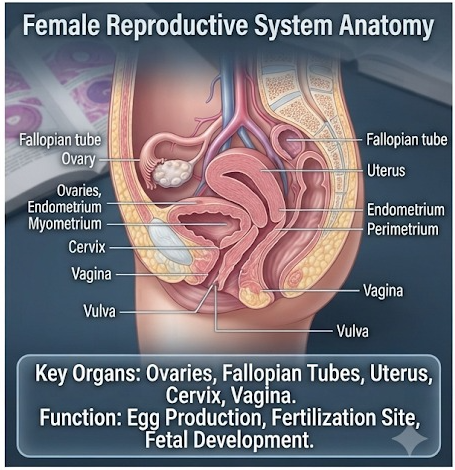
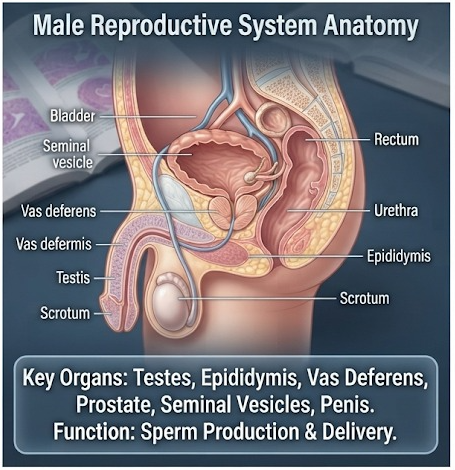
The human reproductive system diagram labeled is an essential learning tool that helps students, educators, and healthcare enthusiasts understand the structure and function of male and female reproductive organs. The reproductive system is responsible for producing offspring and maintaining the continuation of the human species. By studying a labeled diagram, it becomes easier to identify each organ and understand its specific role in reproduction.
This guide explains the human reproductive system, its major parts, functions, and the importance of labeled diagrams for effective learning.
What Is the Human Reproductive System?
The human reproductive system is a group of organs that work together to enable reproduction. It includes separate reproductive organs in males and females, each designed to perform specialized functions.
The system also produces hormones that regulate puberty, sexual development, fertility, and pregnancy.
Human Reproductive System Diagram Labeled
A labeled human reproductive system diagram typically includes the following organs:
Male Reproductive System
- Testes
- Epididymis
- Vas deferens
- Seminal vesicles
- Prostate gland
- Urethra
- Penis
- Scrotum
Female Reproductive System
- Ovaries
- Fallopian tubes
- Uterus
- Cervix
- Vagina
- Endometrium
Proper labeling helps students identify each structure quickly and understand how these organs work together during reproduction.
Male Reproductive System Functions
The male reproductive system has several important responsibilities:
Testes
The testes produce sperm cells and the hormone testosterone, which supports male physical development and fertility.
Epididymis
This long, coiled tube stores and matures sperm before ejaculation.
Vas Deferens
Mature sperm are transported from the epididymis to the urethra via the vas deferens.
Seminal Vesicles and Prostate Gland
These glands produce fluids that combine with sperm to form semen, providing nutrients and protection for sperm cells.
Penis
The female sexual reproductive tract.
Female Reproductive System Functions
The female reproductive system supports egg production, fertilization, pregnancy, and childbirth.
Ovaries
The ovaries release mature eggs during ovulation and produce estrogen and progesterone hormones.
Fallopian Tubes
These tubes carry the egg from the ovary toward the uterus. Typically, fertilization takes place inside the fallopian tubes.
Uterus
The uterus provides a safe environment where a fertilized egg develops into a fetus during pregnancy.
Cervix
The cervix connects the uterus to the vagina and expands during childbirth.
Vagina
The vagina serves as the birth canal and allows menstrual flow to leave the body.
Importance of a Labeled Human Reproductive System Diagram
A labeled diagram offers several educational benefits:
- Improves understanding of reproductive anatomy.
- Makes it easier to identify organs during exams.
- Helps students remember the functions of each structure.
- Supports biology, medical, and nursing education.
- Simplifies complex reproductive processes.
Visual learning through labeled diagrams is especially helpful for school and college students preparing for science examinations.
Why Understanding the Reproductive System Matters
Learning about the reproductive system promotes awareness of human health, fertility, puberty, and reproductive wellness. It also helps individuals understand the biological changes that occur during adolescence and adulthood.
Knowledge of reproductive anatomy encourages better health decisions and improves awareness of reproductive disorders, preventive healthcare, and family planning.
A human reproductive system diagram labeled is an excellent educational resource for understanding the anatomy and functions of male and female reproductive organs. Each organ performs a unique role that contributes to reproduction and overall reproductive health. Whether you are preparing for exams, studying biology, or simply expanding your knowledge, a clearly labeled diagram makes learning more accurate, engaging, and effective. By understanding the reproductive system, students gain a stronger foundation in human anatomy and appreciate the remarkable processes that sustain human life.
How to Choose the Best Online Courses for Career Advancement
Exploring the Top Scientific Theories That Changed the World