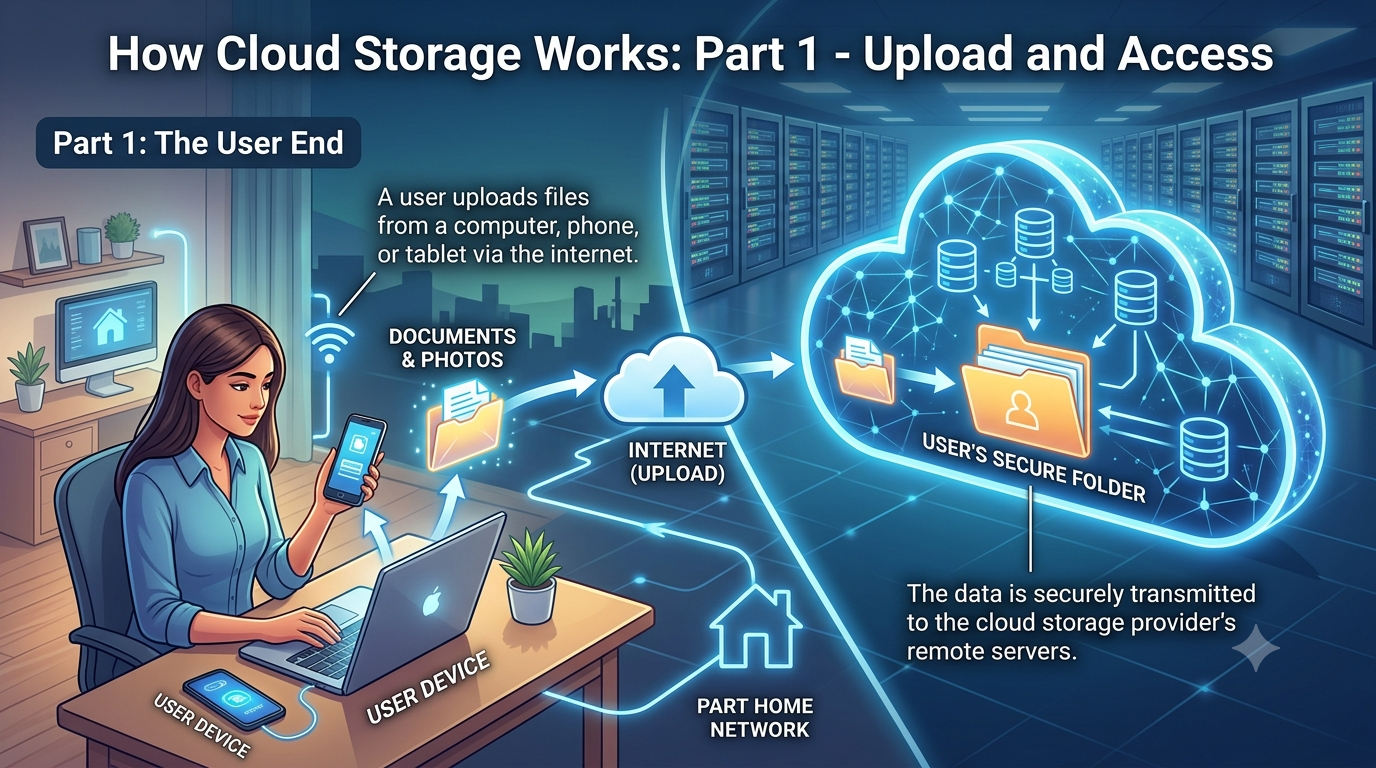
In today’s digital world, cloud storage has become an essential part of personal and business data management. From storing photos and videos to backing up important documents, cloud storage provides a secure and convenient way to access files from anywhere. But many people still wonder: how does cloud storage work? Understanding the basics can help users make better decisions about protecting and managing their digital information.
What Is Cloud Storage?
Cloud storage is a technology that allows users to save data on remote servers instead of storing it directly on a computer, smartphone, or external hard drive. These servers are maintained by cloud service providers and are connected through the internet. When users upload files to the cloud, the data is stored in large data centers located in different parts of the world.
Popular cloud storage services include Google Drive, Dropbox, Microsoft OneDrive, and iCloud. These platforms enable users to access their files from multiple devices without carrying physical storage devices.
How Cloud Storage Works
Cloud Storage Work by transferring data from a user’s device to remote servers through an internet connection. When a file is uploaded, it is sent to a cloud provider’s data center, where it is stored securely. The cloud provider manages the hardware, software, and infrastructure required to store and protect the data.
When users need access to their files, they simply log into their cloud storage account through a web browser or application. The requested data is retrieved from the servers and delivered to the device almost instantly.
This process allows users to store large amounts of data without worrying about device storage limitations.
Data Centers-The Backbone of Cloud Storage
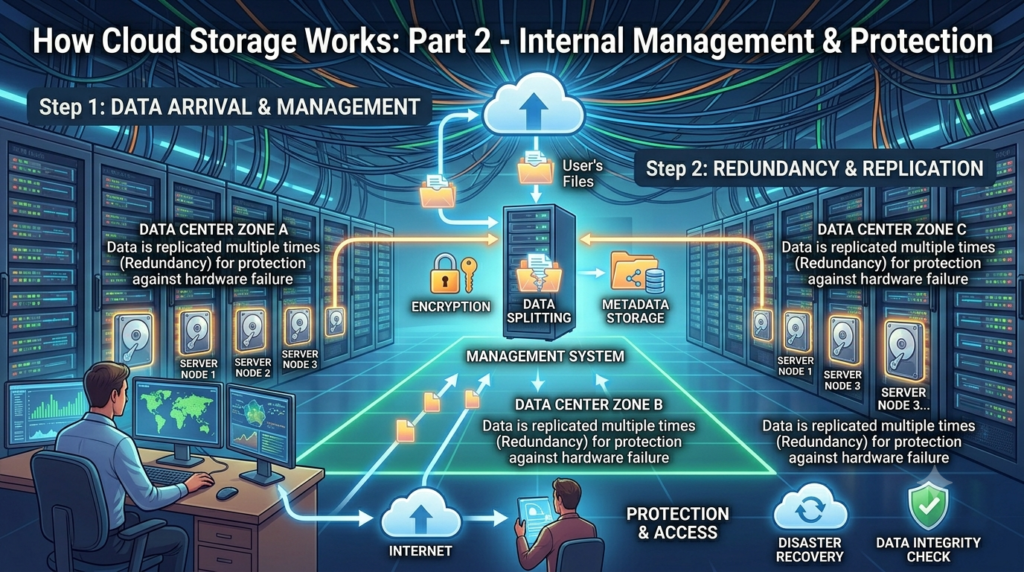
Data centers are large facilities filled with powerful servers that store and manage digital information. These centers are equipped with advanced cooling systems, backup power supplies, and security measures to ensure continuous operation.
Cloud providers often store copies of data across multiple servers and locations. This redundancy helps prevent data loss if a server fails or experiences technical issues. As a result, cloud storage offers greater reliability than many traditional storage methods.
Security Features in Cloud Storage
One of the biggest concerns regarding cloud storage is security. To protect user data, cloud service providers implement various security measures, including:
- Data encryption during transfer and storage
- Multi-factor authentication
- Access control permissions
- Automatic backups
- Continuous security monitoring
Encryption converts data into unreadable code, ensuring that unauthorized users cannot access sensitive information. These security features make cloud storage a trusted solution for individuals and businesses alike.
Benefits of Using Cloud Storage
Cloud storage offers numerous advantages that contribute to its growing popularity:
Easy Accessibility
Users can access files from anywhere with an internet connection, making remote work and collaboration more efficient.
Automatic Backup
Cloud storage automatically backs up important files, reducing the risk of data loss due to hardware failure, theft, or accidental deletion.
Scalability
Storage capacity can be increased as needed without purchasing additional hardware.
Cost-Effective Solution
Businesses can reduce infrastructure costs by relying on cloud providers to manage storage systems and maintenance.
Types of Cloud Storage
There are three main types of cloud storage:
Public Cloud Storage
Storage services are provided over the internet and shared among multiple users.
Private Cloud Storage
A dedicated cloud environment is used by a single organization, offering greater control and security.
Hybrid Cloud Storage
This model combines public and private cloud solutions, allowing businesses to balance flexibility and security.
The Future of Cloud Storage
As technology continues to evolve, cloud storage is becoming faster, more secure, and more intelligent. Emerging technologies such as artificial intelligence, machine learning, and advanced encryption are helping cloud providers improve data management and cybersecurity.
Businesses and individuals increasingly rely on cloud storage for collaboration, backup, disaster recovery, and digital transformation initiatives. Its ability to provide secure, flexible, and scalable storage solutions ensures that cloud technology will remain a critical part of modern computing.
Cloud storage works by storing digital data on remote servers that can be accessed through the internet. By utilizing secure data centers, advanced encryption, and automatic backup systems, cloud storage offers a reliable and efficient way to manage information. Whether for personal use or business operations, cloud storage provides convenience, security, and scalability, making it an essential technology in today’s connected world.
Effects of AI in Upcoming Technology
Manhole – Essential Access Points in Urban Infrastructure
RCPC Manhole Covers and Frames
Read Also : Social Network Website Design