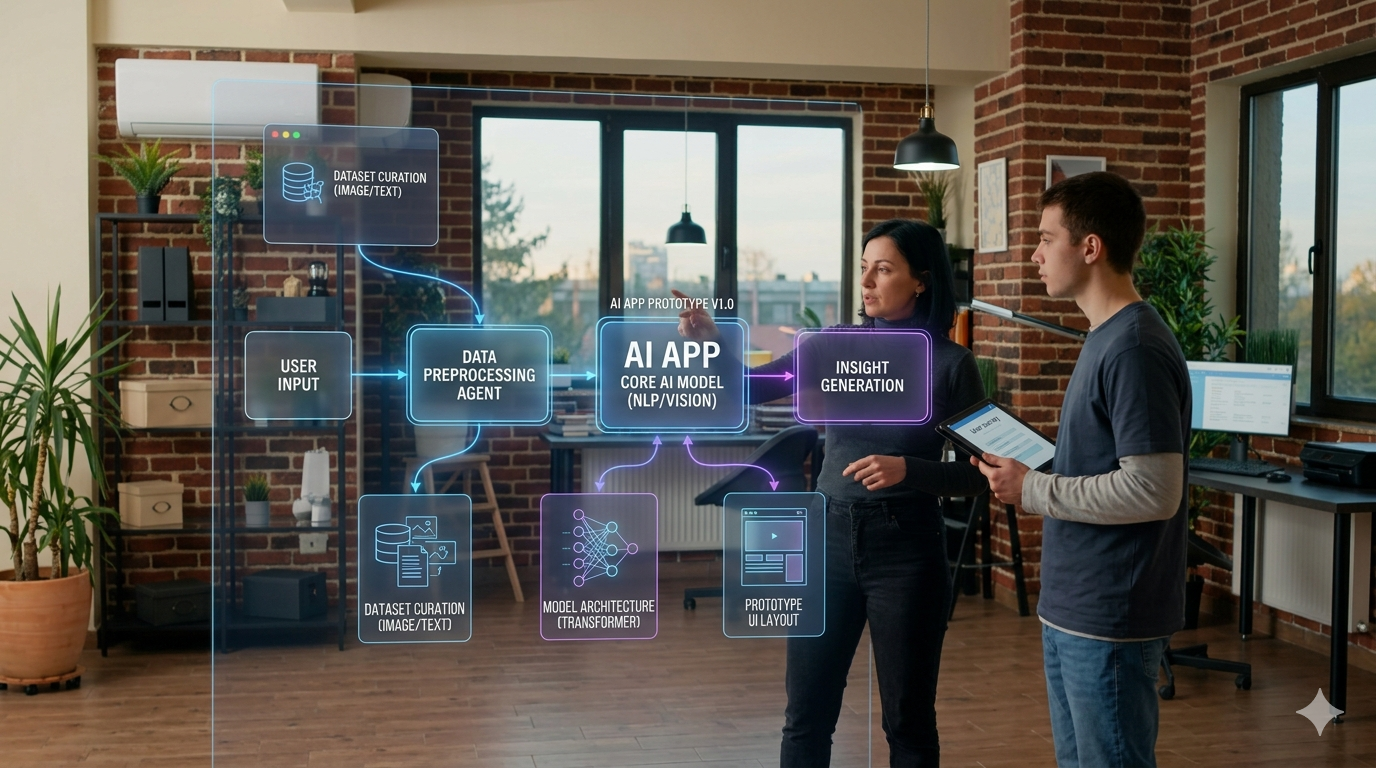
Artificial Intelligence (AI) is transforming industries worldwide, helping businesses automate processes, improve customer experiences, and make smarter decisions. From chatbots and virtual assistants to recommendation engines and image recognition tools, AI applications are becoming increasingly popular. If you’re wondering how to build an AI app, this guide will walk you through the essential steps involved in creating a successful AI-powered application.
What Is an AI App?
An AI app is a software application that uses artificial intelligence technologies such as machine learning, natural language processing (NLP), computer vision, or predictive analytics to perform tasks that typically require human intelligence. AI apps can analyze data, learn from user interactions, and continuously improve their performance over time.
Define the Purpose of Your AI App
Before starting development, identify the problem your AI app will solve. Understanding your target audience and business objectives is crucial. Ask yourself:
- What challenge will the app address?
- Who are the end users?
- What AI features are required?
A clear goal helps streamline the development process and ensures the app delivers real value.
Collect and Prepare Data
Data is the foundation of every AI application. The quantity and quality of data directly affect how well your AI model works.
Key steps include:
- Gathering relevant datasets
- Removing duplicate or incorrect information
- Labeling data for supervised learning
- Organizing data into training and testing sets
Clean, structured data enables the AI model to learn accurately and generate reliable results.
Choose the Right AI Technology
Different AI applications require different technologies. Select the appropriate AI approach based on your project requirements.
Common AI technologies include:
Machine Learning
Used for predictions, recommendations, and pattern recognition.
Natural Language Processing (NLP)
Ideal for chatbots, voice assistants, and language translation apps.
Computer Vision
Useful for facial recognition, object detection, and image analysis.
Deep Learning
Best suited for complex tasks involving large datasets and advanced decision-making.
Choosing the right technology can significantly improve the effectiveness of your AI app.

Develop and Train the AI Model
Once your data is ready, the next step is building and training the AI model. Developers often use popular frameworks such as TensorFlow, PyTorch, or Scikit-learn to create machine learning models.
The training process involves:
- Feeding data into the model
- Adjusting parameters
- Evaluating performance
- Improving accuracy through multiple iterations
The goal is to create a model that can make accurate predictions or decisions when exposed to new data.
Build the Application Interface
A user-friendly interface is essential for any successful AI app. Whether you’re creating a mobile app, web application, or desktop solution, the design should focus on simplicity and usability.
Important considerations include:
- Intuitive navigation
- Fast response times
- Clear visual elements
- Seamless interaction with AI features
A well-designed interface enhances user engagement and satisfaction.
Integrate AI Into the App
After training the AI model, integrate it into your application. This step connects the AI engine with the front-end and back-end systems.
Developers typically use APIs, cloud services, or custom integrations to deploy AI functionality. Popular cloud platforms such as AWS, Google Cloud, and Microsoft Azure provide scalable AI services that simplify deployment.
Test and Optimize Performance
Thorough testing ensures your AI app functions correctly under different conditions. Evaluate:
- Accuracy of AI predictions
- Application speed
- User experience
- Security and privacy compliance
Continuous optimization helps improve model performance and keeps the application competitive.
Launch and Monitor the AI App
After testing, launch the AI app to your target audience. However, development does not end after deployment. Monitor user behavior, collect feedback, and retrain the AI model regularly.
Ongoing improvements help maintain accuracy, adapt to changing user needs, and enhance overall performance.
Build an AI App requires careful planning, quality data, the right technology stack, and continuous optimization. By defining a clear objective, training an effective AI model, and delivering a seamless user experience, businesses can create powerful AI applications that drive innovation and growth. As artificial intelligence continues to evolve, investing in AI app development can provide a significant competitive advantage in today’s digital marketplace.
Effects of AI in Upcoming Technology
Manhole – Essential Access Points in Urban Infrastructure
RCPC Manhole Covers and Frames
Read Also : Social Network Website Design