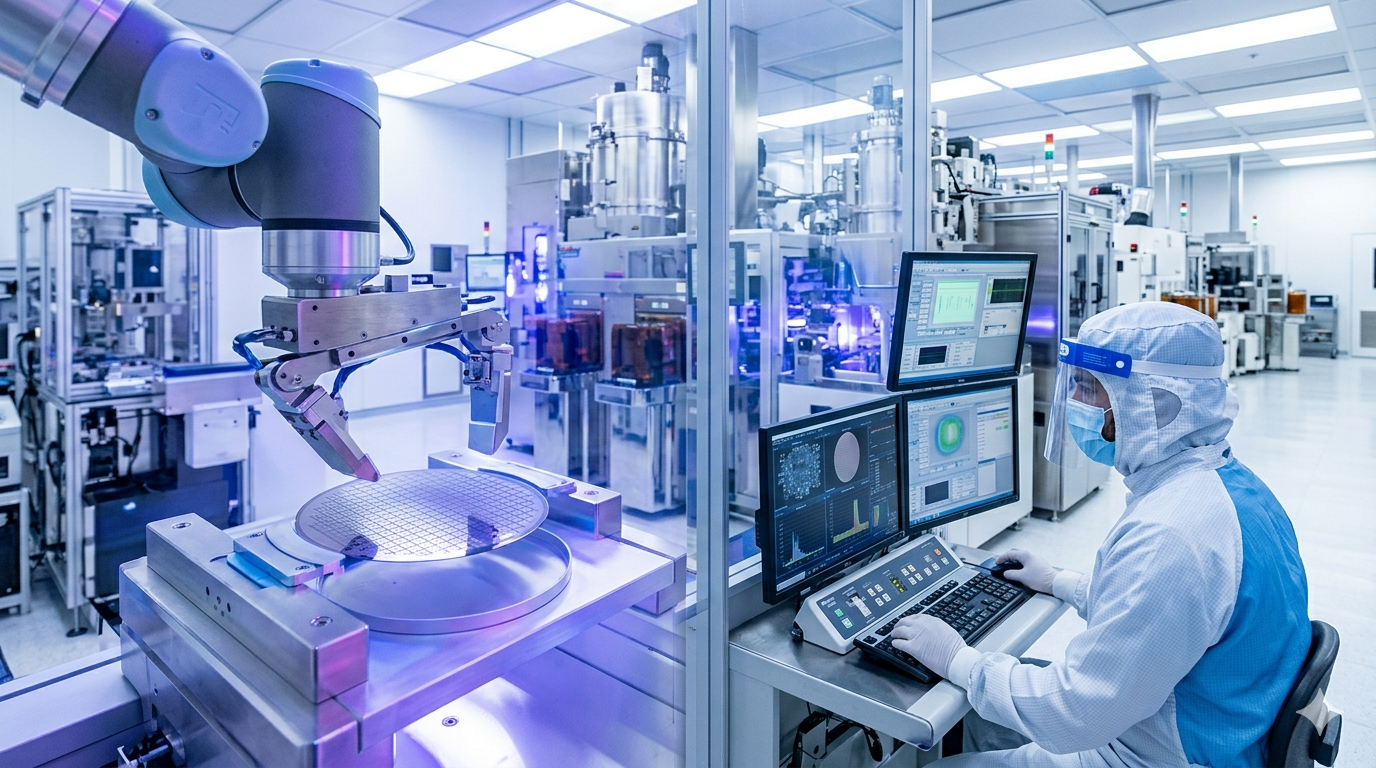
The global semiconductor industry is once again making headlines as chipmakers, governments, and technology companies continue investing heavily in advanced semiconductor manufacturing. From artificial intelligence processors to electric vehicle chips, Semiconductor News Today reflects how critical the industry has become for the global economy and future technologies.
Rising Demand Drives Semiconductor Market Expansion
The semiconductor market is experiencing strong growth due to increasing demand for AI-powered devices, cloud computing, smartphones, and automotive electronics. Major technology companies are competing to develop faster and more efficient chips capable of supporting advanced applications such as machine learning, autonomous driving, and high-performance computing.
Industry experts predict that semiconductor sales will continue rising throughout 2026 as businesses expand digital infrastructure and consumers demand smarter devices. The growing adoption of 5G technology and Internet of Things (IoT) devices is also fueling the need for advanced semiconductor components worldwide.
AI Boom Creates Huge Opportunities for Chipmakers
Artificial intelligence remains one of the biggest drivers of semiconductor growth today. Companies developing AI software require powerful graphics processing units (GPUs) and AI accelerators to train large language models and data systems.
Leading semiconductor manufacturers are investing billions of dollars in AI chip production to meet this rising demand. Data centers are increasingly relying on high-performance semiconductors to process massive amounts of information quickly and efficiently.
The AI revolution has also increased competition among chipmakers, pushing companies to innovate rapidly in areas such as energy efficiency, processing speed, and chip architecture. Analysts believe AI-focused semiconductors will remain one of the hottest segments in the tech market for years to come.
Governments Increase Investment in Semiconductor Manufacturing
Countries around the world are strengthening semiconductor production capabilities to reduce dependence on foreign supply chains. Governments in the United States, India, South Korea, Japan, and Europe are offering incentives and funding packages to encourage local chip manufacturing.
India is emerging as an important semiconductor destination with several companies announcing plans for chip fabrication plants and semiconductor assembly facilities. The Indian government’s push toward electronics manufacturing is expected to create new employment opportunities and strengthen the country’s technology ecosystem.
Global supply chain disruptions during recent years highlighted the importance of semiconductor self-reliance. As a result, nations are focusing on domestic production to ensure stable chip supplies for industries such as defense, automotive, telecommunications, and healthcare.

Automotive Industry Faces Increasing Semiconductor Demand
Semiconductors are increasingly used in the automotive industry, making it one of the biggest consumers. Modern electric vehicles require thousands of chips for battery management, infotainment systems, advanced driver assistance systems, and safety technologies.
Automobile manufacturers are partnering directly with semiconductor companies to secure chip supplies and avoid production delays. The transition toward electric and autonomous vehicles is expected to significantly increase semiconductor consumption over the next decade.
Experts believe automotive semiconductors will become a major growth engine for the global chip industry as vehicle technology continues evolving rapidly.
Advanced Chip Technology Shapes the Future
Semiconductor companies are now focusing on smaller and more powerful chip designs. Advanced manufacturing processes such as 3nm and 2nm chip technology are improving performance while reducing power consumption.
These next-generation semiconductors are expected to power future smartphones, laptops, AI systems, and industrial automation technologies. Companies investing in research and development are gaining competitive advantages in the rapidly changing semiconductor landscape.
The development of quantum computing and advanced memory technologies is also opening new possibilities for the semiconductor sector. Researchers are working on innovative chip solutions capable of handling complex computing tasks far beyond current capabilities.
Challenges Continue for the Semiconductor Industry
Despite strong growth, the semiconductor industry still faces several challenges. High manufacturing costs, geopolitical tensions, supply chain issues, and talent shortages continue affecting chip production globally.
Building semiconductor fabrication plants requires massive investments and advanced technical expertise. In addition, increasing global competition is putting pressure on companies to maintain innovation while controlling costs.
Environmental concerns are also becoming more important as semiconductor manufacturing consumes large amounts of water and energy. A lot of businesses are currently implementing sustainable practices and making investments in more environmentally friendly manufacturing methods.
Semiconductor News Today highlights an industry undergoing rapid transformation and expansion. With AI, electric vehicles, cloud computing, and advanced electronics driving demand, semiconductors remain at the center of global technological progress.
As governments and companies continue investing heavily in chip manufacturing and innovation, the semiconductor industry is expected to play an even bigger role in shaping the digital future. Businesses, investors, and consumers alike will continue watching semiconductor developments closely as the race for technological leadership accelerates worldwide.