
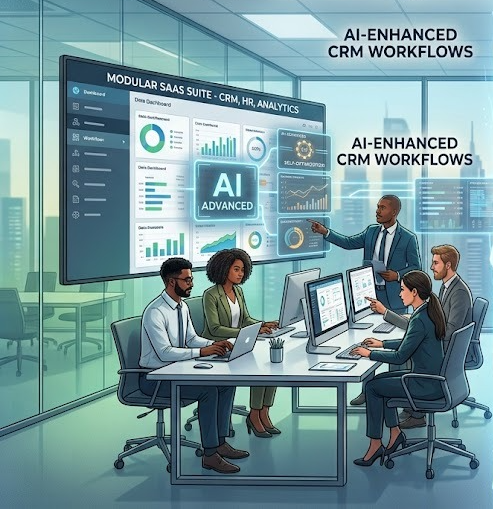
Artificial Intelligence (AI) is transforming the technology industry at an unprecedented pace. From intelligent chatbots to automated business workflows, AI-powered tools are changing how companies operate and deliver services. This rapid evolution has sparked an important question among business leaders and technology experts: Will AI replace traditional SaaS?
The short answer is no—but it will significantly transform it. Rather than eliminating Software as a Service (SaaS), AI is reshaping how SaaS applications are built, used, and monetised. Businesses that embrace AI-driven innovation will gain a competitive advantage, while those relying on outdated software models may struggle to keep up.
Understanding Traditional SaaS
Traditional SaaS refers to cloud-based software that users access through a web browser or mobile application without installing it locally. Customers typically pay a monthly or annual subscription to use these services.
Popular SaaS platforms provide solutions for customer relationship management, project management, accounting, communication, and marketing. Their success comes from affordability, scalability, automatic updates, and easy accessibility from anywhere with an internet connection.
However, most traditional SaaS platforms still depend heavily on manual user input, predefined workflows, and fixed features.
How AI Is Changing the SaaS Industry
Artificial Intelligence introduces intelligence into software by allowing systems to analyse data, understand user behaviour, automate repetitive tasks, and make recommendations.
Modern AI-powered SaaS applications can:
- Automate customer support using AI assistants
- Generate reports and business insights
- Predict customer behaviour
- Personalise user experiences
- Create content automatically
- Detect fraud and security threats
- Improve decision-making through predictive analytics
These capabilities reduce manual work while improving efficiency and productivity.
Why AI Will Not Completely Replace SaaS
Although AI is becoming increasingly powerful, it still requires a platform where businesses manage data, users, permissions, billing, integrations, and workflows. This infrastructure is exactly what SaaS provides.
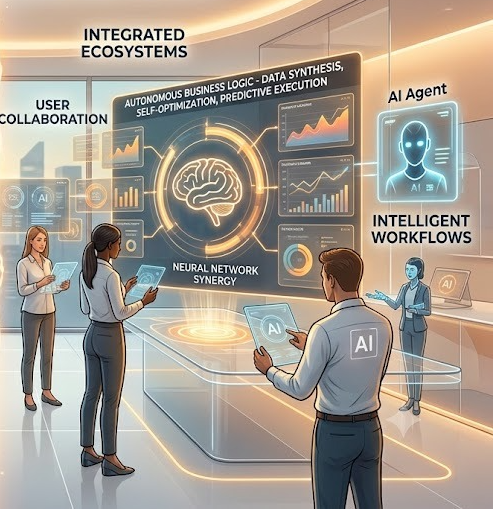
Instead of replacing SaaS, AI acts as an intelligent layer built on top of existing software.
For example, project management software can use AI to prioritise tasks automatically, while CRM platforms can predict which leads are most likely to convert. The software itself remains SaaS—the difference is that it becomes smarter and more efficient.
Therefore, AI enhances SaaS rather than replacing it.
The Rise of AI-Native SaaS Platforms
A new generation of software is emerging: AI-native SaaS.
Unlike traditional platforms that add AI as an extra feature, AI-native applications are designed around artificial intelligence from the beginning.
These platforms can:
- Understand natural language
- Generate content instantly
- Automate complex workflows
- Learn from user interactions
- Continuously improve recommendations
Businesses increasingly prefer AI-native solutions because they save time, reduce costs, and improve operational efficiency.
Challenges Facing Traditional SaaS Companies
The growing adoption of AI also presents challenges for conventional SaaS providers.
Some of the biggest challenges include:
- Increasing customer expectations
- Higher competition from AI startups
- Rising infrastructure costs for AI models
- Data privacy and compliance concerns
- Continuous need for AI model training
Companies that fail to integrate AI risk losing market share to more innovative competitors.
What Businesses Should Expect
The future belongs to software that combines cloud computing with artificial intelligence.
Businesses should expect SaaS platforms to become more conversational, automated, and predictive. Instead of navigating multiple menus, users will increasingly interact with software using natural language commands.
Routine administrative tasks will be automated, allowing employees to focus on strategic work that creates greater business value.
So, will AI replace traditional SaaS? The answer is no. AI is not eliminating SaaS; it is redefining it.
The next generation of software will combine the reliability of SaaS with the intelligence of AI to deliver faster, smarter, and more personalised experiences. Companies that invest in AI-enabled SaaS solutions will be better positioned to improve productivity, reduce operational costs, and meet evolving customer expectations.
As artificial intelligence continues to evolve, traditional SaaS will not disappear—it will transform into a more intelligent, adaptive, and automation-driven ecosystem. Businesses that embrace this shift today will be well-prepared for the future of digital innovation.
Effects of AI in Upcoming Technology
Manhole – Essential Access Points in Urban Infrastructure
RCPC Manhole Covers and Frames
Read Also : Social Network Website Design