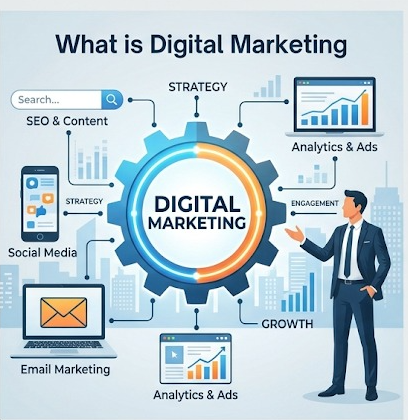
The use of online channels and digital technologies to advertise goods, services, or brands is known as Digital Marketing. Unlike traditional marketing methods such as print ads or billboards, digital marketing leverages the internet, social media, search engines, email, and websites to reach a targeted audience. In today’s fast-paced digital world, businesses of all sizes rely on digital marketing to connect with customers, increase brand awareness, and drive sales.
Why Digital Marketing is Important
Digital marketing has become essential because people spend a significant amount of time online. Whether browsing websites, using social media, or searching for information on search engines, consumers are constantly interacting with digital platforms. This creates an opportunity for businesses to engage with potential customers where they are most active.
Its cost-effectiveness is one of the main benefits of digital marketing. Compared to traditional marketing, it allows businesses to reach a wider audience at a lower cost. Additionally, digital marketing provides measurable results, enabling businesses to track performance and optimize campaigns in real-time.
Types of Digital Marketing
1. Search Engine Optimization (SEO)
SEO is the process of optimizing a website to rank higher on search engine results pages. By using relevant keywords, improving website speed, and creating quality content, businesses can attract organic traffic without paying for ads.
2. Social Media Marketing
Marketing on social media includes promoting products or services on websites like Twitter, LinkedIn, Instagram, and Facebook. It helps businesses build relationships with their audience, increase brand visibility, and drive engagement.
3. Content Marketing
Content marketing focuses on creating valuable and informative content such as blog posts, videos, infographics, and eBooks. The goal is to educate and engage the audience while building trust and authority in a specific niche.
4. Email Marketing
Email marketing is a direct way to communicate with customers. Businesses send newsletters, promotional offers, and updates to subscribers to nurture leads and maintain customer relationships.
5. Pay-Per-Click Advertising (PPC)
PPC is a paid advertising model where businesses pay each time a user clicks on their ad. Platforms like Google Ads allow businesses to target specific keywords and demographics for better results.
6. Affiliate Marketing
Affiliate marketing involves partnering with individuals or other businesses to promote products. Affiliates earn a commission for every sale or lead generated through their referral.
Key Benefits of Digital Marketing
Digital marketing offers several advantages that make it a powerful tool for businesses:
- Global Reach: Reach audiences worldwide without geographical limitations
- Targeted Marketing: Focus on specific demographics, interests, and behaviors
- Measurable Results: Track clicks, conversions, and ROI easily
- Cost Efficiency: Lower marketing costs compared to traditional methods
- Improved Engagement: Interact directly with customers in real-time
How Digital Marketing Works
Digital marketing works by combining different strategies and channels to reach potential customers. For example, a business may use SEO to attract organic traffic, social media to engage users, and email marketing to convert leads into customers. Data analytics plays a crucial role in understanding user behavior and improving campaign performance.
Businesses also use tools like Google Analytics, CRM software, and marketing automation platforms to monitor and optimize their strategies. This ensures better decision-making and higher returns on investment.
Future of Digital Marketing
The future of digital marketing is constantly evolving with advancements in technology. Trends such as artificial intelligence (AI), voice search, video marketing, and personalized content are shaping the industry. Businesses that stay updated with these trends can gain a competitive advantage and deliver better customer experiences.
Digital marketing is an essential component of modern business strategy. It helps companies reach their target audience, build strong relationships, and achieve measurable growth. By understanding its various types and benefits, businesses can create effective marketing campaigns and stay ahead in the competitive digital landscape.
Trends, opportunities and challenges of farm mechanization in India
Success stories and lessons from India’s agricultural cooperatives
Read Also: Laravel Framework Web Development