
Voice cracking in boys is a completely natural part of growing up. During puberty, many boys experience sudden changes in the pitch and tone of their voice, causing it to sound deeper one moment and higher the next. While these unexpected voice breaks may feel embarrassing, they are a normal sign of healthy physical development.
Understanding the causes of voice cracking can help reduce anxiety and encourage confidence during this important stage of adolescence. In this article, we’ll explore why voice cracking happens, its common causes, how long it lasts, and practical ways to manage it.
What Is Voice Cracking?
Voice cracking refers to sudden, unpredictable changes in the pitch or tone of the voice. It commonly occurs when the vocal cords struggle to adjust to rapid growth during puberty. As the voice box (larynx) develops, the vocal cords become longer and thicker, making it temporarily difficult to control the voice smoothly.
Most boys experience voice cracking between the ages of 11 and 16, although the exact timing varies depending on individual development.
Main Causes of Voice Cracking in Boys
1. Puberty and Hormonal Changes
The most common cause of voice cracking is puberty. During this stage, the body produces higher levels of testosterone, which stimulates the growth of the larynx and vocal cords. As these structures grow rapidly, the voice temporarily becomes unstable until the muscles adapt.
2. Growth of the Larynx
The larynx, also known as the voice box, increases in size during adolescence. As it enlarges, the vocal cords lengthen and thicken, resulting in a deeper voice. This transition period often causes unexpected changes in pitch, leading to voice cracks.
3. Muscle Coordination
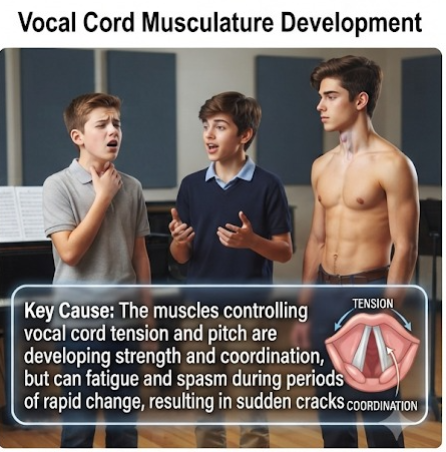
The muscles responsible for controlling the vocal cords require time to adjust to their new size. Until proper coordination develops, boys may experience sudden shifts between high and low notes while speaking or singing.
4. Vocal Strain
Shouting, excessive talking, or singing loudly can strain the vocal cords. During puberty, the vocal cords are already adapting to significant changes, making them more sensitive to overuse and increasing the likelihood of voice cracking.
5. Dry Throat and Dehydration
Insufficient hydration can reduce lubrication around the vocal cords, making smooth vibration more difficult. Drinking enough water helps maintain vocal health and minimizes unnecessary voice breaks.
How Long Does Voice Cracking Last?
For most boys, voice cracking lasts anywhere from several months to two years. The duration depends on individual growth patterns and hormonal development. As puberty progresses, the vocal cords become stronger and more coordinated, allowing the voice to stabilize naturally.
In some cases, occasional voice cracks may continue into the late teenage years, especially during periods of rapid growth.
Tips to Reduce Voice Cracking
Although voice cracking cannot be completely prevented, several healthy habits can support smoother voice development:
- Drink plenty of water throughout the day.
- Avoid excessive shouting or screaming.
- Rest your voice after prolonged speaking.
- Practice gentle breathing and speaking techniques.
- Maintain good overall health through balanced nutrition and regular sleep.
- The vocal chords might be irritated by smoking or being around secondhand smoke.
These simple practices help protect the voice while it adjusts during puberty.
When Should You See a Doctor?
Voice cracking during puberty is usually harmless. However, medical advice may be necessary if:
- Voice changes continue well into adulthood.
- Persistent hoarseness lasts longer than three weeks.
- Pain occurs while speaking.
- Difficulty swallowing or breathing accompanies voice changes.
- There is complete loss of voice without improvement.
A healthcare professional can determine whether an underlying throat or vocal cord condition requires treatment.
Common Myths About Voice Cracking
Many people believe that voice cracking means something is wrong with a boy’s throat. In reality, it is a normal developmental process. Another common myth is that talking less will stop voice cracking immediately. While resting the voice can reduce strain, natural hormonal changes are the primary cause and simply require time.
Voice cracking in boys is a normal and healthy part of puberty. As hormonal changes cause the larynx and vocal cords to grow, temporary breaks in the voice become common. Although it may feel awkward, the condition usually resolves on its own as the body matures. Staying hydrated, avoiding vocal strain, and maintaining healthy habits can support smoother voice development. If voice changes persist unusually long or are accompanied by pain or breathing difficulties, consulting a healthcare professional is recommended.
Liver Cancer Symptoms Cause and Remedy
Read Also: Medical Website Design