Making someone like you isn’t about manipulation or pretending to be someone you’re not. Instead, it’s about understanding human psychology and using positive communication techniques to create meaningful relationships. If you are making new acquaintances, establishing professional networks, or enhancing personal bonds, these psychological strategies can assist you in appearing more friendly and unforgettable.
In this article, we’ll explore proven psychological strategies that encourage trust, comfort, and genuine connection while maintaining authenticity.
Why First Impressions Matter
People often form opinions within the first few seconds of meeting someone. Your body language, smile, tone of voice, and confidence all contribute to how others perceive you.
To create a positive first impression:
- Smile naturally.
- Maintain good posture.
- Make comfortable eye contact.
- Speak clearly and confidently.
- Show genuine interest in the other person.
A warm first impression lays the foundation for a lasting relationship.
Practice Active Listening
One of the most effective psychological tricks to make someone like you is simply listening attentively. Many people focus on what they’ll say next instead of truly hearing the other person.
Active listening includes:
- Maintaining eye contact.
- Nodding while they speak.
- Asking thoughtful follow-up questions.
- Avoiding interruptions.
- Remembering details from previous conversations.
When people feel heard and understood, they naturally feel more connected to you.
Use the Power of Their Name
People enjoy hearing their own names because it creates a sense of personal recognition. Using someone’s name naturally during conversation helps build familiarity and warmth.
For example:
- “That’s a great point, Sarah.”
- “I completely understand what you mean, Rahul.”
Avoid overusing their name, as it can sound forced. Use it naturally throughout the conversation.
Find Common Interests
Humans naturally connect with people who share similar interests, experiences, or values. Discovering common ground creates an instant sense of familiarity.
Talk about topics like:
- Hobbies
- Travel
- Books
- Movies
- Sports
- Career goals
- Food
Even small shared experiences can strengthen a conversation and make interactions more enjoyable.

Mirror Body Language Naturally
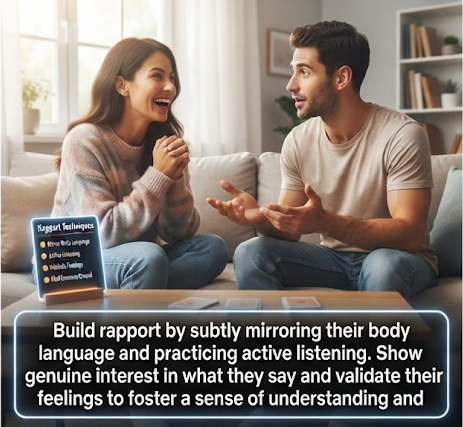
Mirroring is a well-known psychological technique where you subtly reflect another person’s posture, gestures, or speaking pace.
For example:
- If they lean forward slightly, you can do the same.
- If they speak calmly, match their pace.
- If they smile, smile back.
Natural mirroring helps create unconscious feelings of trust and comfort. However, avoid copying every movement, as it may appear unnatural.
Give Genuine Compliments
Everyone appreciates sincere appreciation. Compliment qualities that are meaningful rather than making generic remarks.
Good examples include:
- “You explain things really clearly.”
- “I admire your creativity.”
- “You always stay positive.”
Authentic compliments make people feel valued and remembered.
Show Positive Body Language
Your body language often communicates more than your words.
Positive body language includes:
- Relaxed shoulders
- Open arms instead of crossed arms
- Friendly facial expressions
- Occasional nodding
- Comfortable eye contact
Open body language signals confidence, friendliness, and trustworthiness.
Make People Feel Important
People naturally enjoy spending time with those who make them feel respected and appreciated.
You can achieve this by:
- Asking for their opinion.
- Thanking them sincerely.
- Remembering personal details.
- Celebrating their achievements.
- Showing appreciation for their efforts.
Small acts of recognition leave lasting positive impressions.
Use Humor Wisely
A shared laugh creates emotional connection and reduces social tension. You don’t need to be a comedian—simple, light-hearted humor is enough.
Keep your jokes:
- Respectful
- Inclusive
- Appropriate for the situation
- Free from sarcasm or insults
People tend to remember conversations that made them smile.
Be Authentic and Honest
Trying too hard to impress others often has the opposite effect. Being genuine is considered very appealing in an individual.
Instead of pretending to share interests or exaggerating achievements:
- Be honest about your experiences.
- Admit when you don’t know something.
- Express your genuine opinions respectfully.
- Stay consistent in your actions.
Trust grows when people see authenticity.
Maintain a Positive Attitude
Positive emotions are contagious. People generally enjoy being around individuals who encourage and uplift them.
Practice positivity by:
- Avoiding constant complaints.
- Speaking optimistically.
- Encouraging others.
- Showing gratitude.
- Remaining calm during disagreements.
A positive attitude makes you more approachable and enjoyable to be around.
Respect Personal Boundaries
Building relationships takes time. Respecting someone’s space, opinions, and comfort level demonstrates emotional intelligence.
Avoid:
- Oversharing too soon.
- Being overly persistent.
- Invading personal space.
- Pressuring someone into conversations.
Healthy relationships develop naturally through mutual respect.
These psychological tricks to make someone like you are not about manipulation—they’re about becoming a better communicator and building genuine relationships. By actively listening, showing empathy, using positive body language, offering sincere compliments, and respecting boundaries, you create an environment where trust and connection can naturally grow.
The most effective strategy is simple: be authentic, treat people with kindness, and show genuine interest in their lives. Strong relationships are built on honesty, respect, and meaningful interactions, making these psychological principles valuable in both personal and professional settings.
Adolf Hitler Biography and His Brutality
What Is Middle East and Why Is It Called Middle East?
Read Also:Dating Or Matrimony Website Design