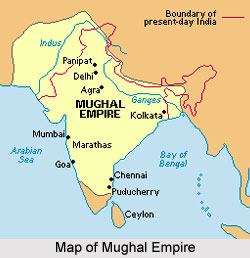
The Mughal Empire at India stands as one of the most remarkable and influential periods in Indian history. Founded in the early 16th century, it brought together a vast and diverse subcontinent under a single administration. Known for its rich cultural heritage, architectural marvels, administrative efficiency, and religious tolerance, the Mughal Empire played a pivotal role in shaping India’s social, political, and cultural landscape.
Foundation of the Mughal Empire
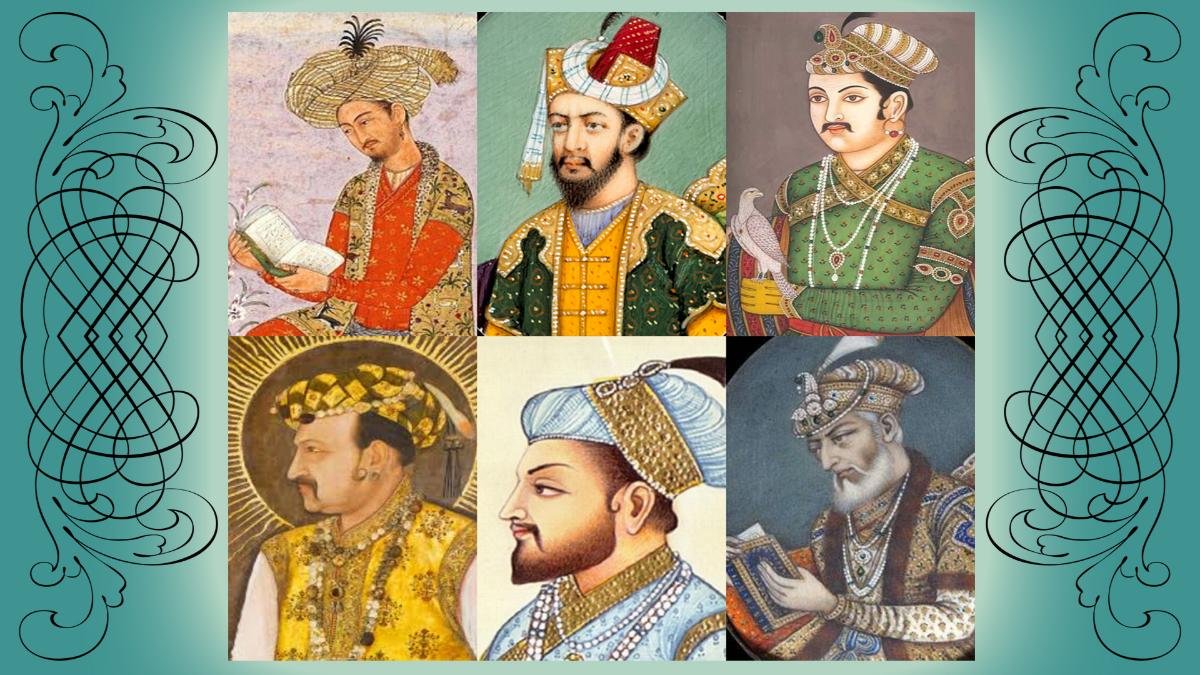
Babur established the Mughal Empire in 1526, following his triumph over Ibrahim Lodi in the First Battle of Panipat. Babur was descended from Timur on his father’s side and Genghis Khan on his mother’s side. After establishing his rule in Delhi, Babur laid the foundation of an empire that would dominate India for over three centuries. His successors, especially Akbar, Jahangir, Shah Jahan, and Aurangzeb, expanded and consolidated Mughal power across the subcontinent.
Expansion under Akbar the Great
The real architect of the Mughal Empire was Emperor Akbar (1556–1605). Known for his administrative brilliance and visionary policies, Akbar introduced a centralized system of governance that promoted unity and stability. He expanded his empire through both diplomacy and warfare, covering nearly the entire Indian subcontinent.
One of Akbar’s most significant contributions was his policy of religious tolerance. He abolished the jizya tax on non-Muslims and established the Din-i-Ilahi, a new faith aimed at promoting harmony among different religions. His court at Fatehpur Sikri became a hub of art, culture, and intellectual debate, attracting scholars and artists from across the world.
Cultural Flourishing during Jahangir and Shah Jahan

The Mughal Empire reached its cultural zenith under Jahangir (1605–1627) and Shah Jahan (1628–1658). Jahangir was a great patron of the arts, particularly painting, which flourished under his reign with the famous Mughal miniature paintings.
Shah Jahan’s reign is often considered the Golden Age of Mughal architecture. He commissioned some of the most iconic monuments in India, including the Taj Mahal, Red Fort, and Jama Masjid. The Taj Mahal, built in memory of his beloved wife Mumtaz Mahal, stands as a symbol of eternal love and one of the Seven Wonders of the World.
Decline under Aurangzeb and Successors
The empire reached its territorial peak under Aurangzeb (1658–1707), who extended Mughal control to the southern regions of India. However, his reign was also marked by religious intolerance and constant warfare. His strict Islamic policies alienated non-Muslim communities and regional powers, leading to widespread revolts. After Aurangzeb’s death, the empire began to crumble due to weak successors, administrative corruption, and the rise of regional kingdoms such as the Marathas, Sikhs, and Rajputs.
The invasion of Nadir Shah in 1739 and later the emergence of the British East India Company further weakened Mughal authority. By the mid-19th century, after the Indian Rebellion of 1857, the British formally ended the Mughal dynasty by exiling the last emperor, Bahadur Shah II.
Legacy of the Mughal Empire
Despite its decline, the Mughal Empire left a profound and lasting legacy in India. It transformed Indian society through advancements in art, architecture, literature, and administration. The Mughal style of architecture, blending Persian, Indian, and Islamic elements, remains a hallmark of India’s cultural heritage.
The Mughal system of governance, including land revenue reforms, judicial administration, and military organization, laid the foundation for later Indian and colonial systems. Moreover, the fusion of Persian and Indian cultures gave rise to new languages, cuisines, and traditions that continue to enrich Indian life today.
The Mughal Empire at India was not just a political dynasty but a golden era of cultural synthesis, architectural brilliance, and administrative innovation. Its rulers, especially Akbar and Shah Jahan, left behind a rich legacy that continues to define India’s historical identity. Though the empire eventually declined, its influence endures in India’s art, architecture, and cultural diversity — a timeless reminder of a civilization that once unified and enriched the Indian subcontinent.
Taj Mahal the Wonder of the World
Read Also: Social Network Website Design