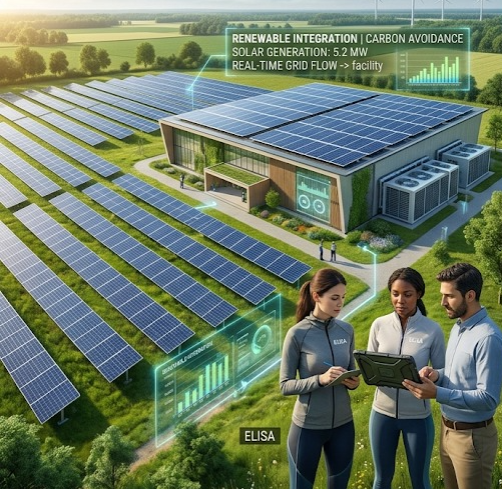
Data centers are the backbone of the modern digital economy, supporting cloud computing, artificial intelligence, streaming, online businesses, and countless connected services. However, their growing energy demand also creates a significant environmental challenge. Green tech data center carbon reduction has therefore become an important priority for companies seeking to balance digital growth with environmental responsibility. By adopting renewable energy, efficient cooling, smart infrastructure, and intelligent energy management, data centers can reduce emissions while improving operational efficiency.
Why Data Center Carbon Reduction Matters
Traditional data centers can consume substantial amounts of electricity because servers, networking equipment, cooling systems, and backup infrastructure often operate continuously. When electricity comes from fossil-fuel-based sources, this consumption contributes to greenhouse gas emissions.
Carbon reduction is not simply an environmental goal. Energy efficiency can also lower operating expenses, improve equipment performance, and strengthen long-term business resilience. As organizations expand their digital operations, creating energy-efficient facilities becomes increasingly important.
Renewable Energy for Greener Data Centers
One of the most effective approaches to data center carbon reduction is replacing fossil-fuel-generated electricity with renewable energy. Solar, wind, hydroelectric, and other clean energy sources can significantly reduce the carbon footprint associated with electricity consumption.
Companies can install solar panels where suitable or purchase renewable electricity through clean-energy agreements. Some operators are also developing data centers in regions with abundant renewable power. Combining renewable energy with battery storage can further improve reliability and help facilities manage fluctuations in energy supply.
Advanced Cooling Technologies
Cooling is one of the largest energy requirements in many data centers. Conventional air-conditioning systems can consume considerable electricity, particularly in facilities containing high-density computing equipment.
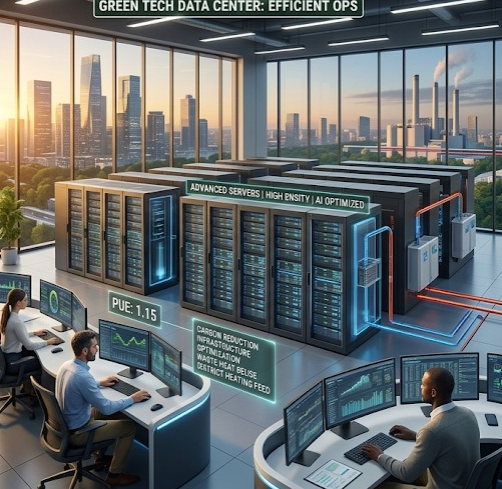
Green technology offers alternatives such as liquid cooling, free-air cooling, intelligent airflow management, and heat recovery systems. Liquid cooling can efficiently remove heat from powerful processors, while smart cooling controls can adjust temperature and airflow according to real-time workloads.
Reducing unnecessary cooling directly lowers electricity consumption and supports a more sustainable data center design.
Artificial Intelligence and Smart Energy Management
Artificial intelligence is becoming an important tool for improving data center efficiency. AI-powered systems can monitor temperature, power consumption, server workloads, and cooling requirements in real time.
By analyzing this information, intelligent management platforms can identify energy waste and automatically adjust equipment. Workloads may also be distributed according to available power capacity or environmental conditions. These capabilities help organizations achieve better green data center efficiency without compromising performance.
Efficient Hardware and Infrastructure
Energy-efficient servers and networking equipment can contribute significantly to carbon reduction. Modern hardware can deliver greater computing performance while consuming less electricity than older systems.
Virtualization is another useful strategy. Instead of running multiple physical servers at low utilization, organizations can consolidate workloads onto fewer machines. This improves resource utilization and reduces the electricity required to operate unnecessary equipment.
Regular hardware maintenance and responsible equipment replacement can further support sustainable operations.
Managing Electronic Waste
Carbon reduction should extend beyond electricity consumption. Data centers also generate electronic waste when servers, batteries, cables, and other components reach the end of their useful lives.
Responsible recycling, equipment refurbishment, component reuse, and proper disposal can reduce environmental impacts. Organizations can also select hardware designed for longer service life and easier repair, supporting a more circular technology ecosystem.
Measuring Carbon Reduction Progress
Successful sustainability programs require measurable goals. Data center operators can monitor power usage effectiveness, renewable energy consumption, carbon emissions, cooling efficiency, and equipment utilization.
Regular reporting helps organizations identify inefficient processes and evaluate whether sustainability investments are producing meaningful results. Transparent measurement also makes it easier to establish realistic carbon reduction targets.
The future of digital infrastructure will increasingly depend on sustainable technologies. Renewable energy, efficient cooling, AI-driven optimization, energy-efficient hardware, and responsible waste management can work together to create greener facilities.
Green tech data center carbon reduction is not a single technology or solution. It is a comprehensive approach to designing, operating, and improving digital infrastructure. As demand for computing continues to rise, organizations that prioritize energy efficiency and clean power can reduce environmental impact while building more resilient and cost-effective data centers.
Effects of AI in Upcoming Technology
Manhole – Essential Access Points in Urban Infrastructure
RCPC Manhole Covers and Frames
Read Also: Social Network Website Design