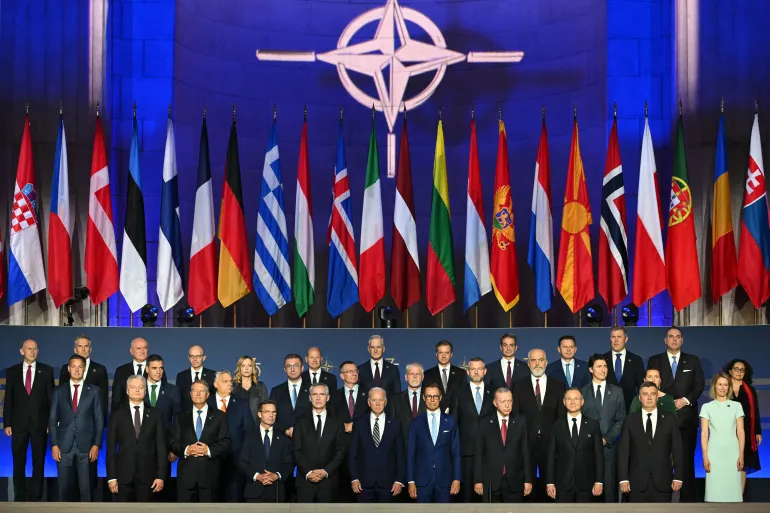
The North Atlantic Treaty Organization (NATO) remains one of the most powerful military alliances in the world in 2026. Established in 1949, NATO has evolved significantly in response to global security challenges. Today, it plays a central role in maintaining peace, collective defense, and geopolitical stability across Europe and North America. This article explores the Current Status of NATO Countries in The Year 2026, including membership, expansion, and strategic importance.
NATO Membership in 2026
As of 2026, NATO consists of 32 member countries, marking its largest expansion since its formation.
The alliance includes nations from both Europe and North America. The original 12 founding members—such as the United States, United Kingdom, France, and Canada—continue to play a leading role in NATO’s decision-making and military strength.
Over the decades, NATO has expanded to include countries from Eastern and Central Europe. The most recent additions are Finland (2023) and Sweden (2024), which joined in response to rising security concerns, particularly due to geopolitical tensions in Europe.
Strategic Importance of NATO Countries
NATO countries collectively represent a powerful military and economic bloc. The alliance operates on the principle of collective defense (Article 5), meaning an attack on one member is considered an attack on all.
In 2026, NATO countries continue to strengthen their defense capabilities, increase military spending, and enhance cooperation in areas such as cybersecurity, intelligence sharing, and advanced military technologies. The presence of nuclear powers like the United States, United Kingdom, and France further strengthens NATO’s deterrence capabilities.
NATO Expansion and New Aspirants
NATO’s “open door policy” remains active in 2026. Several countries, including Ukraine, Georgia, and Bosnia and Herzegovina, are considered aspiring members.
The ongoing geopolitical tensions, especially in Eastern Europe, have accelerated discussions around NATO expansion. However, joining NATO requires unanimous approval from all existing members, making the process complex and politically sensitive.

NATO’s Role in Global Security
In 2026, NATO is not limited to Europe and North America—it plays a broader global role. The alliance collaborates with partner countries across Asia and the Middle East, strengthening international security networks.
One of the key developments in 2026 is NATO’s increased focus on emerging regions like the Arctic. Initiatives such as Arctic Sentry aim to enhance surveillance and defense capabilities in strategically important areas.
Additionally, NATO continues to support Ukraine in its ongoing conflict, demonstrating its commitment to regional stability and democratic values.
Challenges Facing NATO in 2026
Despite its strength, NATO faces several challenges. Internal disagreements among member countries, defense spending disparities, and evolving security threats such as cyber warfare and terrorism require continuous adaptation.
Relations with Russia remain a major concern, as NATO expansion and military activities near Russian borders have increased tensions. Furthermore, balancing relations between European members and North American leadership is an ongoing strategic issue.
Future Outlook of NATO
The future of NATO in 2026 and beyond appears dynamic and evolving. The alliance is expected to continue expanding, modernizing its military capabilities, and strengthening partnerships worldwide.
Upcoming events like the 2026 NATO Summit in Ankara highlight the importance of diplomatic coordination and strategic planning among member nations.
With new security challenges emerging, NATO is likely to remain a cornerstone of global defense and international cooperation.
In 2026, NATO stands as a strong and expanding alliance of 32 countries, adapting to modern security challenges while maintaining its core mission of collective defense. Its continued growth, strategic initiatives, and global partnerships ensure that NATO remains a key player in shaping international security and stability.
Read Also: Social Network Website Design