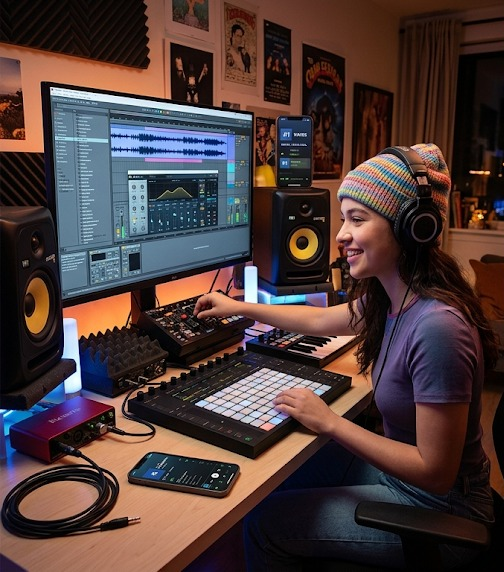
The music industry is experiencing a remarkable transformation as bedroom producers topping modern music charts becomes an increasingly visible trend. Once viewed mainly as hobbyists working with basic equipment, independent producers are now creating polished, commercially successful tracks from bedrooms, apartments, and compact home studios. Affordable technology, powerful music-production software, and digital distribution have dramatically lowered the barriers to entering the music business.
The Rise of the Bedroom Producer
A bedroom producer is typically an artist who creates, records, arranges, and sometimes mixes music independently using a home-based setup. Modern digital audio workstations, virtual instruments, plugins, MIDI controllers, microphones, and headphones allow creators to perform many tasks that once required expensive professional studios.
The growth of accessible technology has made music production more democratic. Producers can experiment with sounds, record vocals, build beats, and complete entire songs without renting a commercial studio. In India, this shift has also opened opportunities for young artists to create music from their personal spaces and share it with audiences around the world.
Technology Is Changing Music Creation
One of the biggest reasons bedroom producers are gaining attention is the rapid improvement of digital music technology. A modern laptop can handle sophisticated recording and production software, while virtual synthesizers, drum machines, effects, and mixing tools can reproduce many functions traditionally associated with professional studios.
This technological accessibility gives independent artists more creative freedom. Instead of waiting for studio availability or label approval, producers can develop ideas whenever inspiration strikes. They can record multiple versions, test different arrangements, and release finished tracks when they believe the music is ready.
Streaming Has Changed the Route to Success

Streaming platforms have also transformed how music reaches listeners. In the traditional music industry, artists often depended on record labels, radio programmers, and physical distribution to gain significant exposure. Today, independent musicians can distribute their work digitally and potentially reach listeners across multiple countries.
The rise of bedroom-produced tracks on streaming charts demonstrates how the relationship between production quality and commercial success is changing. A song does not necessarily need to originate in a prestigious studio to connect with listeners. Strong songwriting, memorable production, originality, and effective promotion can matter just as much as the location where the track was recorded.
Social Media Gives Independent Artists a Voice
Social media has become another powerful tool for bedroom producers. Short-form videos, behind-the-scenes clips, production tutorials, live sessions, and snippets of unreleased songs can help artists build audiences before a full track is released.
This direct relationship between creators and listeners can make music promotion more personal. A producer can show how a beat was created, explain a production technique, or invite followers to participate in a creative challenge. Such content can generate interest and encourage listeners to explore the producer’s wider catalog.
Authenticity Is Becoming a Major Advantage
Modern listeners are increasingly interested in the story behind music. Bedroom production can contribute to an authentic image because audiences can see the creative process rather than only the polished final product.
The limitations of a small studio can even become part of an artist’s identity. Producers may embrace unusual textures, imperfect recordings, experimental arrangements, or lo-fi characteristics that give their tracks a distinctive personality. Academic research has also connected the growth of home recording with broader changes in DIY aesthetics and artist-audience relationships.
Collaboration Without Geographic Limits
Bedroom production does not mean working completely alone. Internet-based collaboration allows producers, singers, songwriters, musicians, mixing engineers, and visual artists to work together from different locations.
A producer can create an instrumental at home, send files to a vocalist in another city, collaborate with a songwriter remotely, and work with a professional mastering engineer online. This distributed workflow allows independent creators to access talent and expertise without being located in a major music center.
What the Future Holds
The rise of bedroom producers is not simply a temporary trend. It represents a broader shift toward decentralized music creation. Professional studios will continue to have an important role, particularly for specialized recording, live instrumentation, advanced mixing, and large-scale projects. However, home studios are becoming an increasingly important part of the modern production ecosystem.
For aspiring musicians, the message is encouraging: success is no longer determined solely by access to an expensive studio. With creativity, technical knowledge, consistent practice, and smart digital promotion, a producer working from a bedroom can potentially reach a global audience.
Bedroom producers topping modern music charts represents one of the most exciting developments in contemporary music. Affordable technology has made professional-style production more accessible, while streaming and social platforms have created new routes to discovery. The combination of creativity, independence, technology, and direct audience connection is giving a new generation of producers the opportunity to compete on a much larger stage. As home production continues to evolve, the next major music breakthrough could come from almost anywhere—even a bedroom.
Indian Classical Music Instruments
Read Also: Laravel Framework Web Development