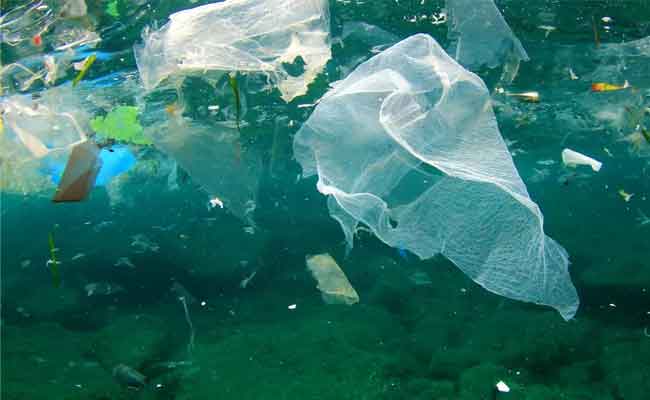
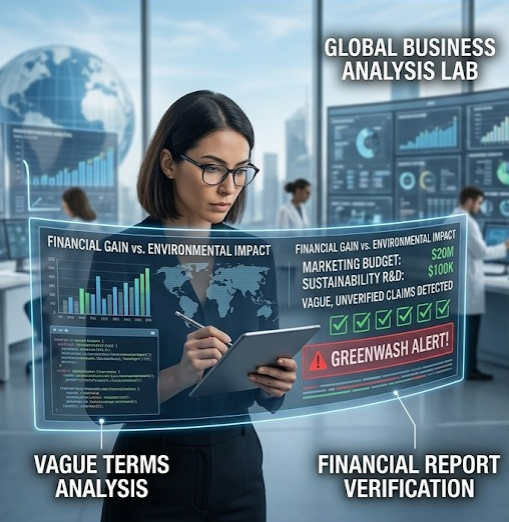
As environmental awareness grows, more companies are promoting themselves as sustainable, eco-friendly, or environmentally responsible. While some businesses genuinely invest in greener practices, others may use corporate greenwashing claims to create an environmentally friendly image without making meaningful changes. Learning how to identify greenwashing can help consumers, investors, and businesses make more informed decisions.
What Is Corporate Greenwashing?
Corporate greenwashing occurs when a company exaggerates, misrepresents, or selectively presents its environmental efforts. Instead of making substantial improvements to its products, operations, or supply chains, a business may rely heavily on attractive environmental messaging.
For example, a company might advertise a product as “green” or “natural” without explaining what makes it environmentally beneficial. Similarly, a business may highlight a small recycling initiative while ignoring significant pollution generated elsewhere in its operations.
Greenwashing can make it difficult to distinguish genuine sustainability from clever marketing.
Why Greenwashing Is a Growing Concern
Consumers increasingly consider environmental impact when choosing products and services. This shift has encouraged businesses to promote sustainability as part of their brand identity.
However, vague environmental advertising can undermine genuine sustainability efforts. When companies make unsupported claims, consumers may spend more money believing they are choosing environmentally responsible products. It can also disadvantage businesses that invest seriously in reducing emissions, waste, and resource consumption.
Spotting corporate greenwashing claims is therefore important for building a more transparent and responsible marketplace.
Watch Out for Vague Environmental Language
One of the easiest ways to identify potential greenwashing is to examine the language used in advertisements and product packaging.
Words such as “eco-friendly,” “green,” “clean,” “natural,” and “sustainable” can sound impressive but may have little meaning without supporting information. A trustworthy environmental claim should explain what exactly has improved.
Instead of accepting a broad statement, look for specific details. For instance, a company might state that it reduced packaging material by a particular percentage or increased recycled content to a clearly identified level.
Specific claims are generally easier to evaluate than attractive but undefined promises.

Check for Evidence and Certifications
Reliable sustainability claims should be supported by evidence. Companies that make legitimate environmental improvements are often willing to provide information about their materials, manufacturing processes, emissions, energy use, or waste reduction programs.
Independent certifications can also provide additional confidence, although not every certification has the same standards. Research who provides the certification and what requirements businesses must meet before using the label.
Do not assume that a green logo automatically proves environmental responsibility.
Look Beyond the Product
Greenwashing can become obvious when you examine the company rather than just one product.
A business may promote a recyclable package while its overall production process remains highly resource-intensive. Another company might announce a tree-planting campaign while providing little information about its broader environmental impact.
Consider the bigger picture, including energy consumption, transportation, manufacturing, sourcing, waste management, and supply-chain practices. Genuine sustainability usually involves improvements across multiple areas rather than one highly publicized campaign.
Be Skeptical of “100% Green” Promises
Absolute environmental claims deserve particular attention. Statements suggesting that a product or company is completely sustainable, carbon-free, or has zero environmental impact can be difficult to justify.
Almost every product requires resources, energy, transportation, or packaging at some stage of its life cycle. A responsible company should acknowledge limitations and explain how it is reducing its environmental footprint.
Honest communication often includes measurable progress instead of claiming perfection.
Research the Company’s Sustainability Reports
For deeper investigation, visit the company’s official website and look for sustainability reports, environmental targets, progress measurements, and supporting data.
Compare current claims with previous reports. Has the company actually reduced emissions or waste over time? Are its targets measurable and time-bound? Does it explain both achievements and remaining challenges?
Consistent reporting can reveal whether sustainability is integrated into business operations or simply being used as a marketing strategy.
Make Informed Purchasing Decisions
Consumers can reduce the impact of greenwashing by asking simple questions before purchasing. What environmental benefit does the product provide? Is there evidence supporting the claim? Is the information independently verified? Does the company’s overall behavior match its marketing?
Taking a few minutes to investigate can prevent misleading environmental claims from influencing purchasing decisions.
Spotting corporate greenwashing claims requires attention, curiosity, and a willingness to look beyond advertising. Vague language, unsupported promises, selective information, and exaggerated environmental benefits are important warning signs. By checking evidence, researching certifications, examining company-wide practices, and comparing measurable results, consumers can better identify genuine sustainability efforts.
As environmental concerns continue to influence the marketplace, informed consumers can encourage companies to replace superficial green marketing with meaningful and measurable environmental action.
Andaman and Nicobar Islands Forests
Tours And Travels Website Design