Artificial Intelligence (AI) has become one of the most transformative technologies of the modern era. From content creation and software development to healthcare and finance, AI is changing how people work and interact with technology. However, a major debate has emerged within the industry: Open-Source AI vs Big Tech AI. While open-source AI promotes transparency, collaboration, and innovation, large technology companies focus on proprietary AI systems backed by massive investments. Understanding the differences between these two approaches can help businesses, developers, and everyday users make informed decisions.
What Is Open-Source AI?
Open-source AI refers to artificial intelligence models, frameworks, and tools whose source code is publicly available. Developers can inspect, modify, improve, and distribute these models according to their licensing terms.
Popular open-source AI projects include Meta’s Llama models, Stable Diffusion, Hugging Face Transformers, and TensorFlow. These tools enable developers to build custom AI applications without relying entirely on commercial providers.
Advantages of Open-Source AI
- Complete transparency in model architecture and code.
- Lower costs for startups and independent developers.
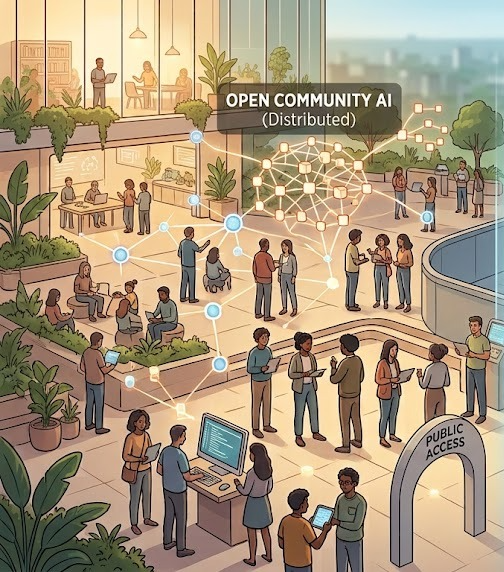
- Strong community-driven innovation.
- Greater flexibility for customization.
- Faster research and experimentation.
Open-source AI has significantly lowered the barrier to entry, allowing individuals and small organizations to compete with much larger companies.
What Is Big Tech AI?
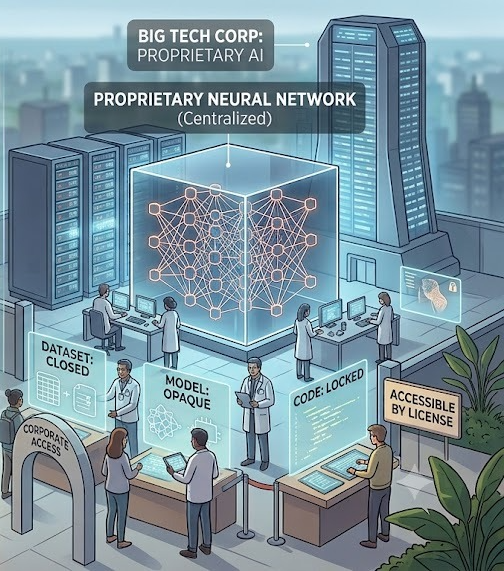
Big Tech AI refers to proprietary artificial intelligence systems developed by major technology companies such as Google, Microsoft, OpenAI, Amazon, and Anthropic. These organizations invest billions of pounds in research, infrastructure, and computing resources to build highly advanced AI models.
Unlike open-source projects, proprietary AI models are generally accessed through cloud-based APIs or subscription services rather than direct access to the underlying code.
Benefits of Big Tech AI
- Industry-leading performance and accuracy.
- Enterprise-grade security and compliance.
- Continuous updates and maintenance.
- Reliable customer support.
- Integration with cloud services and business software.
Large companies also possess enormous datasets and computing infrastructure, enabling them to train increasingly sophisticated AI systems.
Open-Source AI vs Big Tech: Key Differences
1. Transparency
Open-source AI allows developers to inspect the model, understand its training process, and verify how it operates. Proprietary AI systems generally keep their internal architecture confidential.
2. Cost
Many open-source AI models are free to download and use, although deployment costs still exist. Big Tech AI usually requires paid subscriptions or API usage fees based on consumption.
3. Customization
Open-source AI offers complete flexibility for fine-tuning models according to specific business requirements. Proprietary AI solutions often provide limited customization options.
4. Security
Big Tech companies invest heavily in cybersecurity, infrastructure, and compliance certifications. Open-source AI depends largely on the organization implementing appropriate security measures.
5. Innovation
Open-source communities evolve rapidly because thousands of contributors worldwide continuously improve models. Big Tech focuses more on controlled development with extensive testing before public release.
Which Is Better for Businesses?
The answer depends on business needs.
Small startups and research organizations often prefer open-source AI because it reduces costs and provides greater flexibility. Developers can tailor models to specific industries, languages, or workflows.
Large enterprises may choose proprietary AI because they require high availability, regulatory compliance, dedicated technical support, and guaranteed service reliability.
Many organizations are adopting a hybrid approach by combining open-source models with commercial AI services to balance cost, performance, and security.
Challenges Facing Both Approaches
Open-source AI faces challenges such as hardware requirements, security risks, and inconsistent documentation. Deploying large models also requires technical expertise.
Big Tech AI, on the other hand, raises concerns about vendor lock-in, limited transparency, high subscription costs, and concentration of AI power within a few corporations.
As AI regulations continue evolving, both models will need to address issues surrounding privacy, bias, copyright, and responsible AI development.
The Future of AI
The future of artificial intelligence is unlikely to belong exclusively to either open-source communities or Big Tech companies. Instead, both ecosystems will continue driving innovation in different ways.
Open-source AI will accelerate experimentation, education, and decentralized innovation, while proprietary AI will deliver enterprise-scale solutions backed by massive infrastructure and research investments.
As AI technology matures, collaboration between open-source developers and commercial organizations could create more powerful, accessible, and trustworthy AI systems for everyone.
The debate over Open-Source AI vs Big Tech is shaping the future of artificial intelligence. Open-source AI empowers developers with freedom, transparency, and affordability, while Big Tech AI offers unmatched performance, security, and enterprise support. Rather than viewing them as competitors, businesses should evaluate their specific goals and choose the approach—or combination—that best meets their needs. As AI continues to evolve, both open-source innovation and proprietary advancements will play vital roles in building the next generation of intelligent technology.
Effects of AI in Upcoming Technology
Manhole – Essential Access Points in Urban Infrastructure
RCPC Manhole Covers and Frames
Read Also : Social Network Website Design