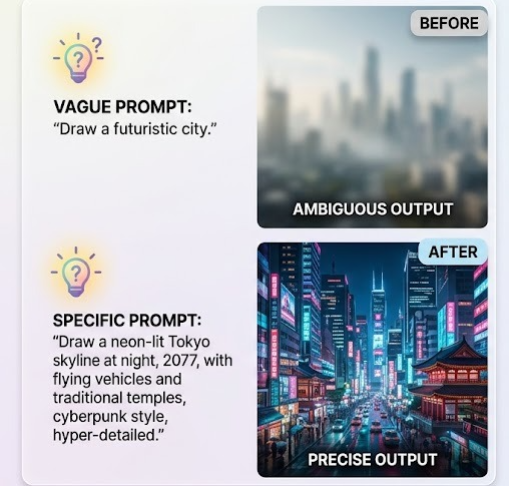
Artificial intelligence has transformed the way businesses, developers, marketers, and content creators work. However, getting high-quality responses from AI tools depends largely on how prompts are written. Prompt engineering is the process of designing clear and effective instructions that help AI generate accurate and relevant outputs. Even experienced users often make common prompt engineering mistakes that lead to vague, incorrect, or incomplete responses.
Understanding these mistakes and learning how to avoid them can significantly improve productivity and the overall quality of AI-generated content. This guide explains the most common prompt engineering errors and provides practical solutions to help you achieve better results.
What Is Prompt Engineering?
Prompt engineering is the practice of creating structured instructions that guide an AI model toward producing the desired response. A well-crafted prompt includes sufficient context, clear objectives, and any necessary constraints. Whether you’re writing blog posts, generating code, creating marketing content, or conducting research, effective prompts are essential for consistent and reliable outputs.
Common Prompt Engineering Mistakes
1. Writing Vague or Generic Prompts
One of the biggest mistakes is providing prompts that lack clarity. Generic requests force the AI to make assumptions, which often leads to inconsistent results.
For example, asking, “Write about digital marketing,” is too broad. A better prompt would be, “Write a 600-word beginner-friendly article explaining the top five digital marketing strategies for small businesses in 2026.”
The more specific your prompt, the more relevant the response becomes.
2. Not Providing Enough Context
AI performs best when it understands the background of your request. Without context, responses may miss the intended audience or purpose.
Instead of saying, “Write an email,” explain who the recipient is, the goal of the message, and the preferred tone. Context allows AI to tailor its output more effectively.
3. Ignoring the Target Audience
Content should always match the needs of its readers. A prompt designed for software developers will differ greatly from one intended for beginners.
Mention the audience clearly in your prompt, such as “Explain cloud computing for high school students” or “Write a technical guide for experienced Laravel developers.”
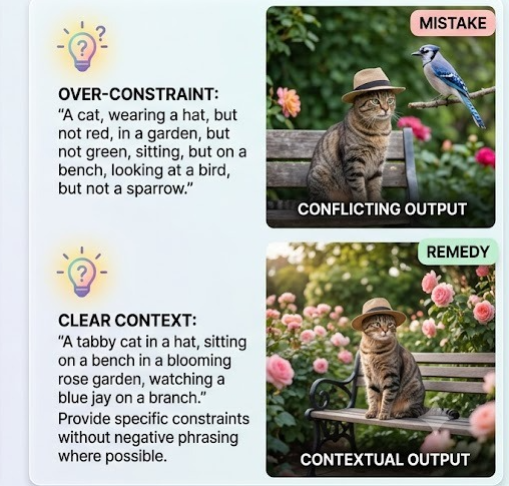
4. Forgetting Output Formatting
Many users overlook formatting instructions. Without guidance, AI may return large blocks of text that are difficult to read.
Specify your preferred structure by requesting headings, bullet points, numbered lists, tables, summaries, or FAQs. Proper formatting improves readability and enhances SEO performance.
How to Improve Prompt Quality
Be Clear and Specific
Define exactly what you need. Include details such as word count, writing style, keywords, target audience, and desired outcome. Clear instructions reduce ambiguity and improve response accuracy.
Break Complex Tasks into Smaller Steps
Instead of asking AI to complete multiple unrelated tasks in one prompt, divide the work into manageable sections. This approach produces more focused and accurate results while making it easier to review the output.
Define Tone and Style
If you need professional, conversational, persuasive, or technical writing, include those requirements in your prompt. Specifying tone ensures consistency across your content.
Include Examples When Possible
Providing sample outputs or reference formats helps AI understand your expectations. Examples reduce misunderstandings and improve content quality.
SEO Best Practices for Prompt Engineering
Prompt engineering also plays an important role in search engine optimisation. When creating SEO-focused content, include your primary keyword naturally throughout the prompt. Mention related keywords, preferred heading structure, meta description requirements, and internal linking suggestions if needed.
Avoid keyword stuffing, as modern search engines prioritise helpful, user-focused content over excessive keyword repetition. Well-structured prompts encourage AI to generate articles that are informative, engaging, and search-engine friendly.
Benefits of Avoiding Prompt Engineering Mistakes
Correcting common prompt engineering errors offers several advantages:
- Produces more accurate AI responses.
- Saves time by reducing unnecessary revisions.
- Improves consistency across different projects.
- Creates SEO-friendly and reader-focused content.
- Enhances productivity for businesses and content creators.
- Generates higher-quality code, articles, emails, and marketing materials.
As AI technology continues to evolve, mastering prompt engineering becomes an increasingly valuable skill.
Learning how to fix common prompt engineering mistakes is essential for anyone using AI tools professionally or personally. Clear instructions, sufficient context, audience awareness, and structured formatting all contribute to better AI-generated results. By refining your prompts and following proven best practices, you can improve content quality, increase efficiency, and maximise the value of artificial intelligence. Investing time in better prompt engineering today will lead to faster workflows, more reliable outputs, and greater success across a wide range of AI-powered applications.
Effects of AI in Upcoming Technology
Manhole – Essential Access Points in Urban Infrastructure
RCPC Manhole Covers and Frames
Read Also : Social Network Website Design