Building a personal library is a dream for many book lovers. A collection of books not only enhances your knowledge but also creates a peaceful space for learning and inspiration. However, many people believe that creating a home library requires a large budget. The good news is that you can build a personal library without spending fortunes. With smart planning, patience, and a few cost-saving strategies, you can fill your shelves with valuable books while staying within your budget.
Whether you enjoy fiction, biographies, self-help, business, history, or educational books, there are countless affordable ways to grow your collection. This guide will show you practical tips to create a meaningful personal library without breaking the bank.
Why Building a Personal Library Matters
A private book collection extends beyond simply being a gathering of books. It reflects your interests, supports lifelong learning, and provides easy access to knowledge whenever you need it.
Some benefits of owning a personal library include:
- Encourages daily reading habits.
- Improves focus and critical thinking.
- Saves time compared to borrowing frequently.
- Creates a comfortable learning environment at home.
- Provides valuable assets for personal and professional development.
Even a small collection can become a lifelong investment.
Buy Second-Hand Books
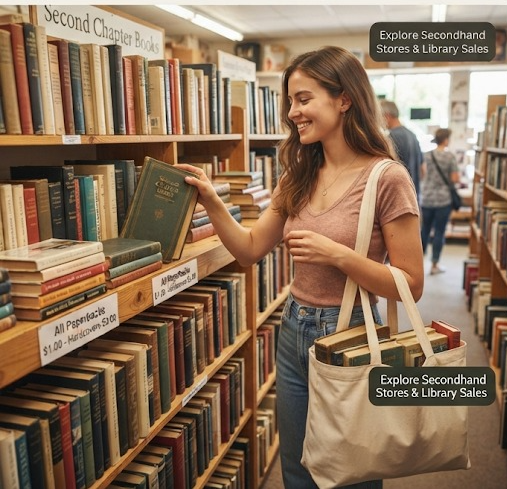
One of the easiest ways to save money is by purchasing second-hand books. Used books are often available in excellent condition at a fraction of the original price.
Look for books at:
- Local thrift stores
- Charity book sales
- Used bookstores
- Online marketplaces
- Community garage sales
Many readers donate books after finishing them, allowing others to purchase quality titles for much less.

Explore Library Sales
Public libraries regularly organize book sales to make room for new collections. These sales often feature books in excellent condition at incredibly low prices.
You may find:
- Classic literature
- Best-selling novels
- Children’s books
- Academic textbooks
- Reference materials
Visiting these events can help you expand your collection while supporting your local library.
Take Advantage of Digital Books
Physical books are wonderful, but digital books offer another affordable option. Many classic books are available for free through public domain websites, while newer titles often go on sale.
Using tablets, smartphones, or e-readers for reading can greatly cut down your expenses while providing you with the opportunity to read numerous books.
Combining physical and digital collections creates a balanced and budget-friendly library.
Join Book Exchange Groups
Book exchange communities allow members to swap books instead of buying new ones. This is an excellent way to discover fresh titles without spending money.
Look for:
- Local reading clubs
- Community centers
- Social media book groups
- Neighborhood exchange shelves
Book swapping also introduces you to genres and authors you may not have considered before.
Shop During Seasonal Sales
Bookstores frequently offer discounts during holiday seasons, clearance events, and annual sales. Planning your purchases around these promotions can help you save significantly.
Consider:
- Buy-one-get-one offers
- Clearance racks
- Publisher discounts
- Festival sales
- Online shopping events
Creating a wish list beforehand helps you avoid impulse buying and focus on books you truly want.
Set a Monthly Book Budget
A simple budget keeps your library growing steadily without affecting your finances.
For example:
- Allocate a fixed amount each month.
- Prioritize books on your reading list.
- Avoid purchasing books you’ll never read.
- Save larger purchases for special occasions.
Small, consistent purchases often build a substantial collection over time.
Organize Your Collection Wisely
A well-organized library makes reading more enjoyable. Arrange books in a way that suits your preferences.
Popular organization methods include:
- Genre
- Author name
- Reading priority
- Publication year
- Color coordination
Keeping your books organized also prevents duplicate purchases and makes finding titles easier.
Borrow Before You Buy
Before purchasing expensive books, consider borrowing them first from friends or public libraries. If you find yourself revisiting a book multiple times, then purchasing your own copy becomes a worthwhile investment.
This approach ensures every book in your collection serves a lasting purpose.
Care for Your Books
Protecting your books helps them last for decades.
Simple maintenance tips include:
- Store books in a dry location.
- Avoid direct sunlight.
- Clean shelves regularly.
- Use bookmarks instead of folding pages.
- Keep books upright for proper support.
Well-maintained books retain their appearance and value for many years.
Focus on Quality Over Quantity
Many people feel pressured to own hundreds of books. Instead, build a thoughtful collection filled with titles that genuinely interest and educate you.
Choose books that:
- Inspire personal growth.
- Support your career.
- Match your hobbies.
- Encourage lifelong learning.
- Offer lasting value.
A carefully selected library is often more meaningful than an oversized collection filled with unread books.
Building a personal library without spending fortunes is completely achievable with the right approach. By purchasing second-hand books, visiting library sales, exploring digital collections, joining book exchanges, and sticking to a realistic budget, you can steadily create a library that reflects your interests and supports lifelong learning. Remember that every great library starts with a single book. Focus on collecting quality titles, caring for them properly, and enjoying the journey of expanding your knowledge one book at a time.
How to Choose the Best Online Courses for Career Advancement
Exploring the Top Scientific Theories That Changed the World