You don’t need to do a total renovation to make your kitchen more environmentally friendly. By making a few thoughtful zero-waste swaps, you can reduce household waste, save money, and contribute to a healthier planet. The kitchen is one of the biggest sources of plastic packaging, food waste, and disposable products, making it the perfect place to begin a sustainable lifestyle.
In this guide, you’ll discover practical zero-waste kitchen swaps that are easy to adopt and beneficial for both your home and the environment.
Why Choose a Zero-Waste Kitchen?
A zero-waste kitchen focuses on minimizing waste by replacing disposable items with reusable, recyclable, or compostable alternatives. Instead of throwing away single-use products, you invest in durable items that last for years.
Benefits include:
- Reduces plastic pollution
- Saves money over time
- Minimizes food waste
- Creates a healthier cooking environment
- Supports sustainable living
Even small changes can make a significant environmental impact when practiced consistently.
Replace Plastic Wrap with Reusable Food Covers
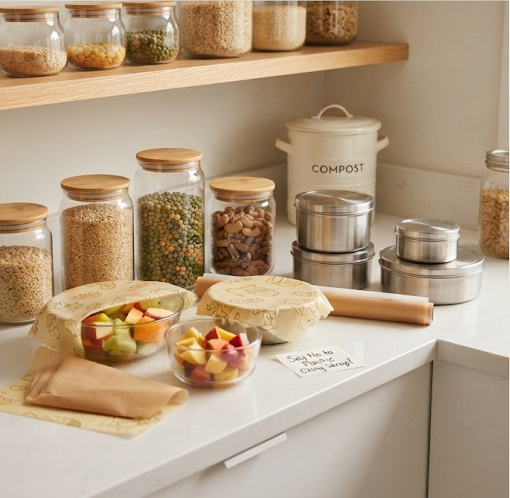
Plastic wrap is convenient but contributes to landfill waste and pollution. A simple alternative is using reusable food covers made from beeswax, silicone, or washable fabric.
These eco-friendly options keep food fresh while eliminating the need for disposable plastic. Glass containers with airtight lids also work well for storing leftovers safely.
Swap Paper Towels for Reusable Kitchen Cloths
Paper towels are one of the most commonly wasted kitchen products. Instead, use:
- Cotton kitchen towels
- Microfiber cleaning cloths
- Reusable dishcloths
- Old T-shirts cut into cleaning rags
These alternatives can be washed and reused hundreds of times, reducing both waste and household expenses.
Choose Glass or Stainless Steel Storage Containers
Plastic food containers often crack, stain, and eventually need replacing. Glass and stainless steel containers are durable, recyclable, and free from harmful chemicals often found in low-quality plastics.
They are perfect for meal preparation, food storage, and pantry organization while helping reduce single-use packaging.
Buy Pantry Staples in Bulk
Buying rice, flour, lentils, nuts, spices, and cereals in bulk significantly cuts down on plastic packaging.
Bring reusable jars or cloth bags when shopping at bulk food stores whenever possible. Bulk purchasing also helps reduce costs and unnecessary packaging waste.
Compost Your Food Scraps
Fruit peels, vegetable scraps, coffee grounds, and eggshells don’t have to end up in the trash.
Home composting transforms organic waste into nutrient-rich compost for gardens or indoor plants. Composting also reduces methane emissions from landfills, making it one of the easiest ways to lower your environmental footprint.
Replace Disposable Cleaning Products
Many kitchen cleaning products come in plastic bottles and contain harsh chemicals.
Consider these sustainable alternatives:
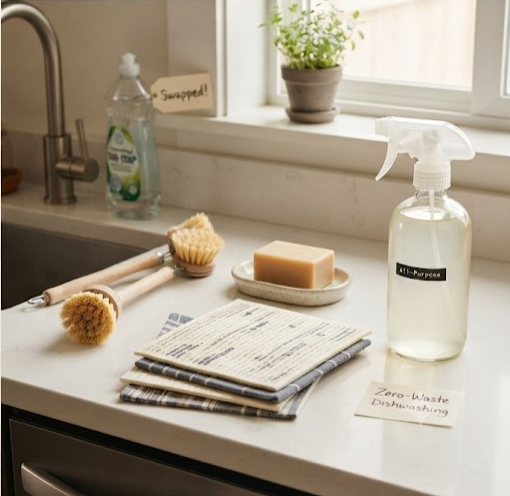
- Refillable cleaning sprays
- Natural vinegar-based cleaners
- Baking soda for scrubbing
- Compostable scrub brushes
- Wooden dish brushes with replaceable heads
These options are effective, affordable, and environmentally friendly.
Use Refillable Soap Dispensers
Instead of purchasing a new plastic bottle of dish soap every month, invest in a refillable dispenser.
Numerous eco-friendly stores in the area now provide the option to refill your dishwashing liquid in bulk, enabling you to use the same bottle multiple times and decrease plastic pollution.
Store Food Properly to Reduce Food Waste
Food waste is a major environmental issue. Proper storage helps fruits, vegetables, and leftovers stay fresh for longer.
Helpful tips include:
- Label leftovers with dates.
- Store herbs in water like fresh flowers.
- Freeze excess food before it spoils.
- Rotate older pantry items to the front.
Reducing food waste saves money and decreases greenhouse gas emissions.
Switch to Reusable Shopping Bags and Produce Bags
Single-use plastic grocery bags create unnecessary waste.
Keep reusable shopping bags in your car or near your front door so they’re always available. Lightweight mesh produce bags are also excellent alternatives for buying fruits and vegetables without disposable plastic.
Start Small and Build Sustainable Habits
A kitchen that produces no waste isn’t about being flawless, it’s about making advancements. Replace disposable products only when they wear out rather than throwing away usable items. Every sustainable swap helps reduce waste and encourages environmentally responsible living.
Over time, these small habits become second nature and inspire others to adopt greener lifestyles as well.
Transforming your kitchen into a zero-waste space is easier than many people think. Swapping plastic wrap for reusable covers, using glass containers, composting food scraps, buying in bulk, and replacing disposable cleaning products are practical steps that benefit both your household and the planet.
Remember, sustainability is built through consistent everyday choices. By making these zero-waste swaps for eco-friendly kitchens, you’ll reduce waste, save money, and create a healthier environment for future generations.
Andaman and Nicobar Islands Forests
Tours And Travels Website Design