

Barrier methods of birth control are among the most widely used contraceptive options for people seeking a non-hormonal way to prevent pregnancy. These techniques function by physically obstructing sperm from reaching and fertilizing an egg. They are easy to use, widely available, and suitable for individuals who prefer temporary contraception without affecting their natural hormones.
In this article, we’ll explore the efficacy of barrier methods of birth control, the different types available, their advantages, disadvantages, and tips for improving their effectiveness.
What Are Barrier Methods of Birth Control?
Barrier methods of birth control are contraceptive devices or products designed to create a physical barrier between sperm and the cervix. Unlike hormonal contraceptives, they do not interfere with ovulation or menstrual cycles. Instead, they prevent sperm from entering the uterus, significantly reducing the chances of pregnancy.
Some barrier methods also provide protection against sexually transmitted infections (STIs), making them an excellent choice for sexually active individuals with multiple partners.
Types of Barrier Birth Control Methods
There are several types of barrier contraceptives available, each with unique features.
Male Condoms
Male condoms are thin coverings made from latex, polyurethane, or polyisoprene. They are worn over the penis before sexual intercourse to prevent sperm from entering the vagina. Condoms are the only birth control method that helps reduce the risk of most sexually transmitted infections while also preventing pregnancy.
Female Condoms
Female condoms are soft pouches inserted into the vagina before intercourse. They create a protective lining inside the vaginal canal and also offer protection against many sexually transmitted infections.
Diaphragms
A diaphragm is a reusable, dome-shaped silicone cup inserted into the vagina to cover the cervix. It is commonly used with spermicide to improve its effectiveness and should remain in place for several hours after intercourse.
Cervical Caps
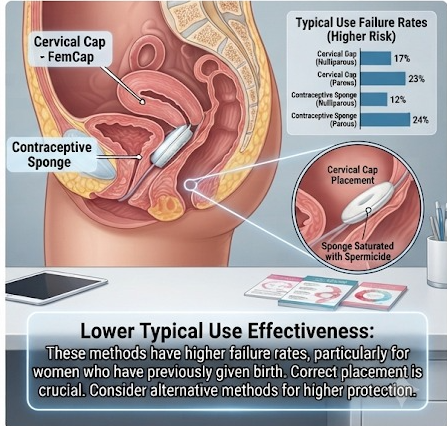
A cervical cap is smaller than a diaphragm and fits tightly over the cervix. Like diaphragms, cervical caps are typically used with spermicide to increase pregnancy prevention.
Contraceptive Sponge
The contraceptive sponge contains spermicide and is inserted into the vagina before sex. It blocks the cervix while continuously releasing spermicide to reduce the chances of fertilization.
How Effective Are Barrier Methods?
The effectiveness of barrier methods depends largely on consistent and correct use.
- Male condoms are highly effective with perfect use and remain one of the most popular contraceptive choices.
- Female condoms also provide reliable pregnancy prevention when used correctly.
- Diaphragms and cervical caps become more effective when paired with spermicide.
- The contraceptive sponge offers varying effectiveness depending on whether the user has previously given birth.
Because human error can reduce effectiveness, using barrier methods properly every time sexual intercourse occurs is essential. Combining a barrier method with another form of contraception can further lower the risk of unintended pregnancy.
Benefits of Barrier Birth Control
Barrier contraceptives provide numerous benefits that appeal to a wide range of people.
- They are hormone-free and do not interfere with natural menstrual cycles.
- Most methods are affordable and widely available.
- Condoms help protect against many sexually transmitted infections.
- Fertility returns immediately after stopping use.
- They can be used only when needed without long-term commitment.
- Most options have very few systemic side effects.
These benefits make barrier methods suitable for people who cannot or prefer not to use hormonal birth control.
Limitations and Possible Drawbacks
Although effective, barrier methods have some limitations.
They must be used correctly every time sexual activity occurs. Incorrect placement, breakage, or slipping can reduce effectiveness. Some people may also have latex allergies, although latex-free options are available. Certain methods, such as diaphragms and cervical caps, require proper fitting and planning before intercourse.
Because they rely on user consistency, barrier methods generally have lower real-world effectiveness than long-acting reversible contraceptives.
Tips to Improve Effectiveness
To maximize pregnancy prevention:
- Use a new condom during every act of intercourse.
- Check expiration dates before use.
- Store condoms in a cool, dry place.
- Use water-based or silicone-based lubricants with latex condoms.
- Follow the manufacturer’s instructions carefully.
- Consider combining barrier methods with spermicide or another contraceptive option for added protection.
Proper education and consistent use significantly improve the success of these methods.
Barrier methods of birth control remain a safe, accessible, and effective choice for millions of people worldwide. Whether you choose condoms, diaphragms, cervical caps, female condoms, or contraceptive sponges, these methods offer flexible contraception without hormones. Condoms provide the added advantage of protecting against many sexually transmitted infections, making them one of the most valuable options for sexual health.
Understanding the efficacy of each barrier method and using it correctly every time can greatly reduce the risk of unintended pregnancy. Discuss your contraceptive options with a healthcare provider to determine which barrier method best fits your lifestyle, health needs, and family planning goals.
Read Also: Wedding Website Design