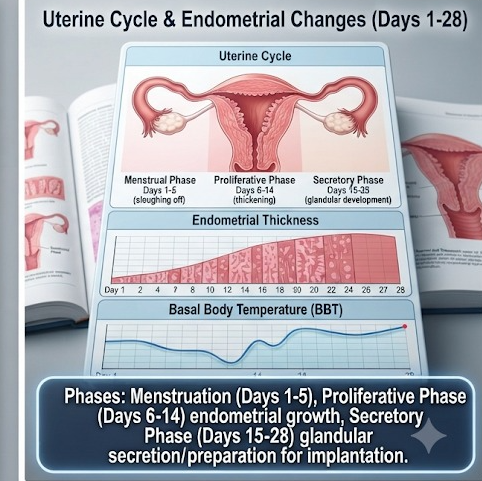
Tracking your ovulation cycle is one of the most effective ways to understand your reproductive health. Whether you’re trying to conceive, avoid pregnancy naturally, or simply learn more about your body, knowing when you ovulate can provide valuable insights. Ovulation is a natural process that occurs every month, and recognizing its signs can help you make informed health decisions.
In this guide, we’ll explain how to track your ovulation cycle, the methods available, and tips to improve accuracy.
What Is Ovulation?
Ovulation is the stage of the menstrual cycle when one of the ovaries releases a mature egg. This egg travels through the fallopian tube, where it may be fertilized by sperm. If fertilization doesn’t occur, the egg dissolves, and the body prepares for the next menstrual cycle.
For most women, ovulation happens approximately 12 to 16 days before the start of the next menstrual period. However, every cycle is unique, so the exact timing may vary.
Why Is It Important to Track Ovulation?
Understanding your ovulation cycle offers several health benefits, including:
- Identifying your most fertile days.
- Increasing the chances of conception.
- Monitoring menstrual health.
- Detecting irregular cycles early.
- Understanding hormonal changes.
- Supporting natural family planning methods.
Tracking ovulation also helps women recognize patterns that may indicate underlying reproductive health concerns.
Calculate Your Menstrual Cycle
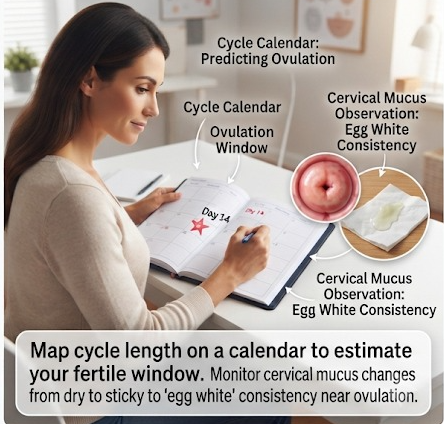
The first step in tracking ovulation is knowing the length of your menstrual cycle.
Calculate the days between the initial day of one menstrual cycle and the initial day of the following menstrual cycle. A typical cycle ranges between 21 and 35 days.
For example:
- 28-day cycle: Ovulation usually occurs around day 14.
- 30-day cycle: Ovulation often happens around day 16.
- 32-day cycle: A cycle lasting 32 days may result in ovulation happening approximately on day 18.
Remember that these are estimates, and actual ovulation may differ slightly each month.
Watch for Physical Signs of Ovulation
Your body naturally provides clues when ovulation is approaching.
Changes in Cervical Mucus
As ovulation nears, cervical mucus becomes clear, slippery, and stretchy, similar to raw egg whites. This consistency assists sperm in moving more smoothly towards the egg.
Mild Pelvic Pain
Some women experience slight discomfort or cramping on one side of the lower abdomen during ovulation. This sensation is known as ovulation pain or “mittelschmerz.”
Increased Libido
Hormonal changes around ovulation often increase sexual desire, which naturally supports conception during fertile days.
Breast Tenderness
Rising hormone levels may cause temporary breast sensitivity before or after ovulation.
Track Basal Body Temperature (BBT)
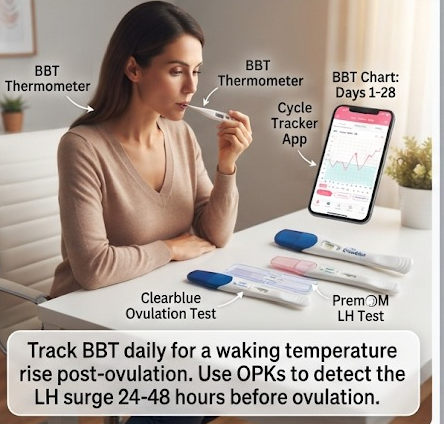
Basal Body Temperature is your body’s resting temperature measured immediately after waking up.
During ovulation, progesterone causes a slight increase in body temperature, usually by 0.3°C to 0.6°C (0.5°F to 1°F).
Take your temperature every morning before getting out of bed and record it in a chart. After several months, you’ll notice a pattern that helps identify when ovulation occurs.
Use Ovulation Predictor Kits
Ovulation Predictor Kits (OPKs) are one of the most reliable home methods for tracking fertility.
These tests detect the luteinizing hormone (LH) surge that occurs 24 to 36 hours before ovulation. A positive result indicates that ovulation is likely to happen soon, making it an ideal time for couples trying to conceive.
Most OPKs are easy to use and available without a prescription.
Try Fertility Tracking Apps
Technology has made ovulation tracking more convenient than ever.
Many mobile apps allow users to record:
- Menstrual cycle dates
- Basal body temperature
- Cervical mucus changes
- Ovulation test results
- Physical symptoms
- Mood and lifestyle habits
Over time, these apps analyze your data and predict future fertile windows more accurately.
Understand the Fertile Window
The fertile window includes the five days before ovulation, the day of ovulation, and sometimes the following day.
Since sperm can survive inside the female reproductive tract for up to five days, having intercourse during this period significantly improves the chances of pregnancy.
Knowing your fertile window also helps couples using fertility awareness methods for family planning.
Factors That Can Affect Ovulation
Several lifestyle and medical factors may influence your ovulation cycle, including:
- High stress levels
- Poor nutrition
- Excessive exercise
- Hormonal disorders
- Polycystic Ovary Syndrome (PCOS)
- Thyroid conditions
- Sudden weight gain or loss
- Certain medications
If your periods are consistently irregular or absent, consult a healthcare professional for evaluation.
Tips for More Accurate Ovulation Tracking
For the best results, combine multiple tracking methods instead of relying on just one.
Helpful tips include:
- Record your cycle consistently.
- Measure BBT at the same time every morning.
- Observe cervical mucus daily.
- Use ovulation tests during your expected fertile window.
- Maintain a healthy diet and lifestyle.
- Get enough sleep and manage stress.
The more consistent your tracking, the more accurate your predictions become.
When Should You See a Doctor?
Seek medical advice if:
- Your menstrual cycles are consistently shorter than 21 days or longer than 35 days.
- You haven’t ovulated for several months.
- You are below 35 years old and have been attempting to get pregnant for more than a year.
- You’re over 35 and have been trying for six months without success.
- You experience severe pelvic pain or unusually heavy bleeding.
Early medical evaluation can identify treatable conditions that may affect fertility.
Learning how to track your ovulation cycle empowers you to better understand your reproductive health and fertility. Whether you use a calendar, monitor cervical mucus, record basal body temperature, or rely on ovulation predictor kits and mobile apps, consistency is the key to accurate tracking.
Every woman’s cycle is unique, so take time to learn your body’s natural patterns. By combining different tracking methods and maintaining healthy lifestyle habits, you’ll gain valuable insights that support family planning, fertility goals, and overall well-being.
Liver Cancer Symptoms Cause and Remedy
Read Also: Medical Website Design