Secondary sex characteristics are the physical features that develop during puberty and distinguish males and females without being directly involved in reproduction. Unlike primary sex characteristics, which include the reproductive organs present at birth, secondary sex characteristics appear as the body matures under the influence of hormones.
These changes help individuals reach sexual maturity and contribute to differences in physical appearance between males and females. They are a natural part of human growth and play an important role in adolescence.
Secondary Sex Characteristics Definition
The secondary sex characteristics definition refers to the physical traits that develop during puberty because of hormonal changes but are not directly responsible for reproduction. These characteristics include body hair, changes in voice, breast development, muscle growth, and body fat distribution.
The development of these traits is controlled mainly by hormones such as testosterone in males and estrogen in females. Although these changes vary from person to person, they generally follow a predictable pattern during puberty.
Difference Between Primary and Secondary Sex Characteristics
Understanding the difference between primary and secondary sex characteristics helps explain how the human body develops.
Primary sex characteristics include the reproductive organs such as the ovaries, uterus, penis, and testes. These organs are present from birth and are directly involved in reproduction.
Secondary sex characteristics, on the other hand, develop later during puberty. They enhance physical differences between males and females but do not directly participate in the reproductive process.
Secondary Sex Characteristics in Males
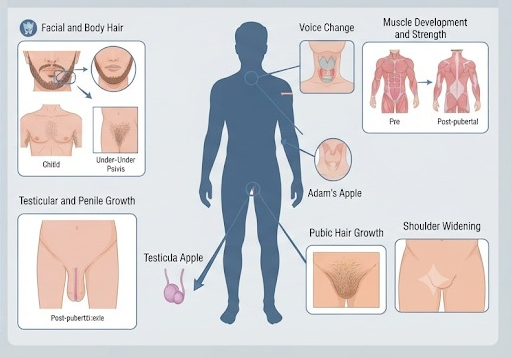
During puberty, boys experience several noticeable physical changes due to increased testosterone production.
Males frequently exhibit the following secondary sex traits:
- Growth of facial hair, including beard and mustache.
- Development of chest and body hair.
- Deepening of the voice as the vocal cords enlarge.
- Increased muscle mass and physical strength.
- Broadening of the shoulders.
- Rapid increase in height during growth spurts.
- Increased oil production in the skin, which may lead to acne.
These changes usually begin between the ages of 9 and 14, although the timing differs for every individual.
Secondary Sex Characteristics in Females
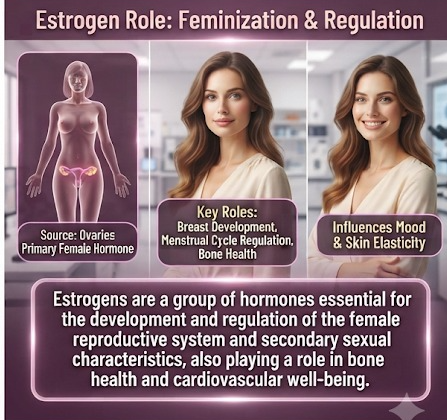
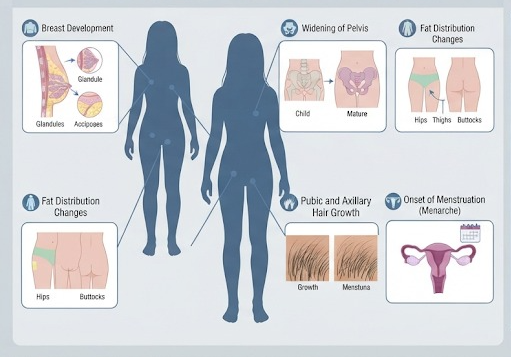
Girls also experience significant changes during puberty, mainly due to estrogen production.
Common secondary sex characteristics in females include:
- Breast development.
- Widening of the hips.
- Growth of pubic and underarm hair.
- Increased body fat around the hips, thighs, and buttocks.
- Growth spurts in height.
- Softer skin and changes in body shape.
Most girls begin developing these characteristics between the ages of 8 and 13, but normal puberty can occur slightly earlier or later.
Hormones Responsible for Secondary Sex Characteristics
Hormones act as chemical messengers that trigger puberty and physical development.
The primary hormones responsible include:
- Testosterone: Promotes muscle growth, facial hair, deeper voice, and other male characteristics.
- Estrogen: Supports breast development, fat distribution, and female body shape.
- Growth Hormone: Contributes to rapid increases in height and bone growth during adolescence.
These hormones are released by the endocrine system and work together to support healthy physical development.
Why Are Secondary Sex Characteristics Important?
Secondary sex characteristics are important because they indicate that the body is progressing through puberty normally. They also prepare the body for adulthood by supporting physical maturity and sexual development.
These characteristics contribute to:
- Normal adolescent growth.
- Physical differences between males and females.
- Improved bone and muscle development.
- Development of adult body shape.
- Psychological and emotional transition into adulthood.
It is important to remember that everyone develops at their own pace, and variations in timing are usually normal.
Factors Affecting Their Development
Several factors influence when and how secondary sex characteristics develop.
These include:
- Genetics and family history.
- Nutrition and overall health.
- Hormonal balance.
- Physical activity.
- Certain medical conditions or endocrine disorders.
A healthy diet, regular exercise, adequate sleep, and proper healthcare support normal growth during puberty.
Understanding the secondary sex characteristics definition helps explain one of the most important stages of human development. These physical traits emerge during puberty under the influence of hormones and distinguish males and females without directly participating in reproduction. Features such as breast development, facial hair, voice changes, broader shoulders, and wider hips are all examples of secondary sex characteristics. Although every individual experiences puberty differently, these changes are a normal part of growing into adulthood. Learning about them promotes better awareness of human biology, health, and adolescent development.
How to Choose the Best Online Courses for Career Advancement
Exploring the Top Scientific Theories That Changed the World