Understanding the stages of puberty in girls timeline helps parents, caregivers, and young girls prepare for the natural changes that occur during adolescence. Puberty is a gradual process where a girl’s body develops into an adult body capable of reproduction. While every girl experiences puberty at her own pace, most begin between the ages of 8 and 13 years and complete the process by 15 to 17 years.
This guide explains each stage of puberty in girls, including physical, emotional, and hormonal changes.
What Is Puberty?
Puberty is the stage of life when hormones trigger significant changes in the body. The brain signals the ovaries to produce estrogen, which leads to the development of reproductive organs and secondary sexual characteristics. Genetics, nutrition, overall health, and lifestyle can all influence when puberty begins.
Stages of Puberty in Girls Timeline
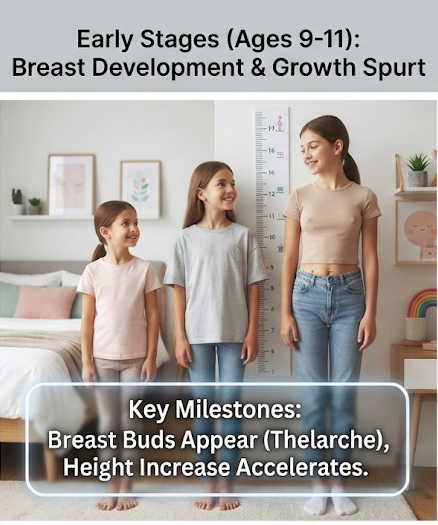
Ages 8–10: The Beginning of Puberty
The earliest signs of puberty usually appear during this stage. One of the first noticeable changes is breast budding, where small lumps develop beneath the nipples. Girls may also experience a growth spurt and increased sweating.
Common changes include:
- Breast buds begin to form.
- Height starts increasing faster.
- Mild body odor develops.
- Emotional sensitivity may increase.
Not every girl begins puberty at the same age, so slight differences are completely normal.
Ages 10–12: Rapid Physical Development
This is often the most active stage of puberty. The body grows rapidly, and several noticeable physical changes occur within a short period.
Changes during this stage include:
- Breasts continue developing.
- Pubic and underarm hair begins to grow.
- Hips gradually widen.
- Skin becomes oilier, increasing the chance of acne.
- Weight and height increase quickly.
Many girls also become more aware of their appearance and may experience mood swings due to changing hormone levels.
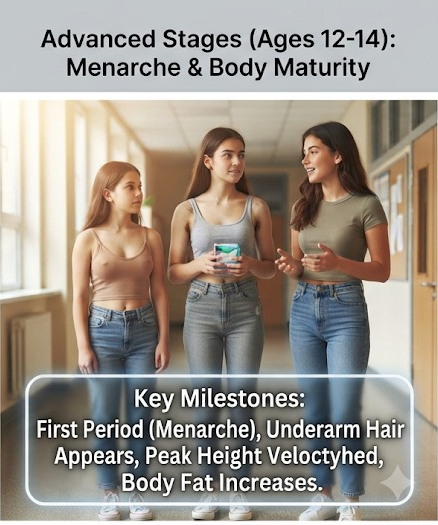
Ages 11–14: First Menstrual Period
One of the biggest milestones in the stages of puberty in girls timeline is the first menstrual period, known as menarche. Most girls have their first period between 11 and 14 years, although it can occur earlier or later.
Other developments include:
- Breasts become fuller.
- Menstrual cycles begin.
- Vaginal discharge may appear before the first period.
- Growth continues but gradually slows.
Periods may be irregular during the first couple of years, which is generally considered normal.
Ages 14–17: Puberty Nears Completion
During the final stage of puberty, most physical development is complete. Height growth slows significantly, and the body reaches its adult shape.
Typical changes include:
- Regular menstrual cycles become established.
- Breasts reach their mature size.
- Body hair becomes thicker.
- Emotional maturity improves.
- Reproductive organs are fully developed.
By the end of this stage, most girls have completed puberty, although emotional growth continues into early adulthood.
Emotional Changes During Puberty
Puberty affects more than just physical appearance. Hormonal changes can influence emotions and behavior. Girls may experience:
- Mood swings
- Increased self-consciousness
- Greater independence
- New social interests
- Changing friendships
Support from parents, teachers, and healthcare providers can help girls navigate these changes with confidence.
Factors That Affect Puberty Timing
Several factors influence when puberty starts, including:
- Family genetics
- Nutrition and body weight
- Physical activity
- Overall health
- Certain medical conditions
If puberty begins before age 8 or has not started by age 13, it is advisable to consult a healthcare professional.
Tips for Managing Puberty
Girls can make puberty easier by adopting healthy habits such as:
- Eating a balanced diet rich in calcium and iron.
- Exercising regularly.
- Maintaining good personal hygiene.
- Getting enough sleep every night.
- Talking openly with trusted adults about concerns.
These habits support healthy physical and emotional development.
The stages of puberty in girls timeline represent a natural journey from childhood to adulthood. Although every girl’s experience is unique, understanding the typical sequence of changes can reduce anxiety and build confidence. With proper education, emotional support, and healthy lifestyle habits, girls can navigate puberty successfully and embrace this important stage of life with greater awareness.
Liver Cancer Symptoms Cause and Remedy
Read Also: Medical Website Design