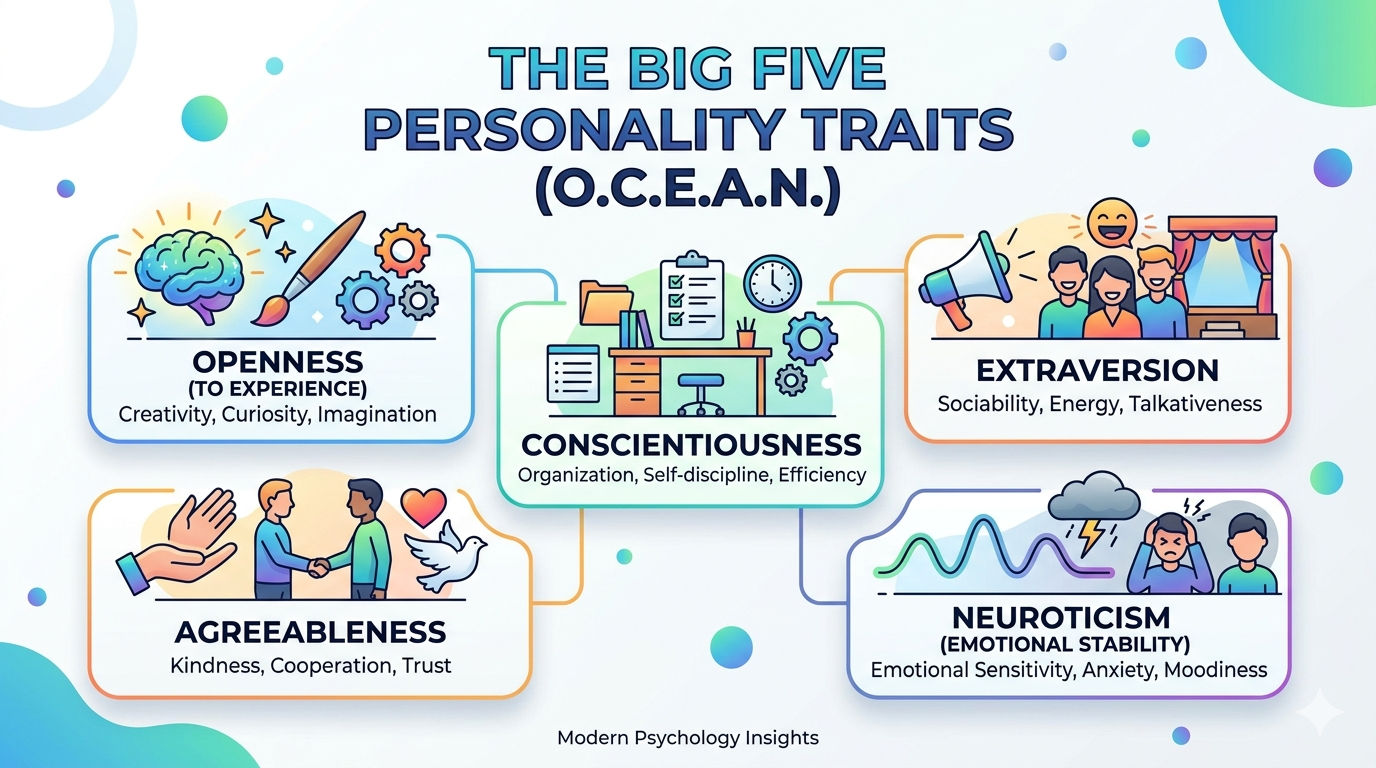
Personality plays an important role in shaping human behavior, communication, and decision-making. Psychologists have developed different theories to explain personality, but one of the most accepted models is the Big Five Personality Traits theory. Also known as the Five-Factor Model (FFM), this framework helps people understand themselves and others better. The model is widely used in psychology, education, business, and personal development.
What Are the Big Five Personality Traits?
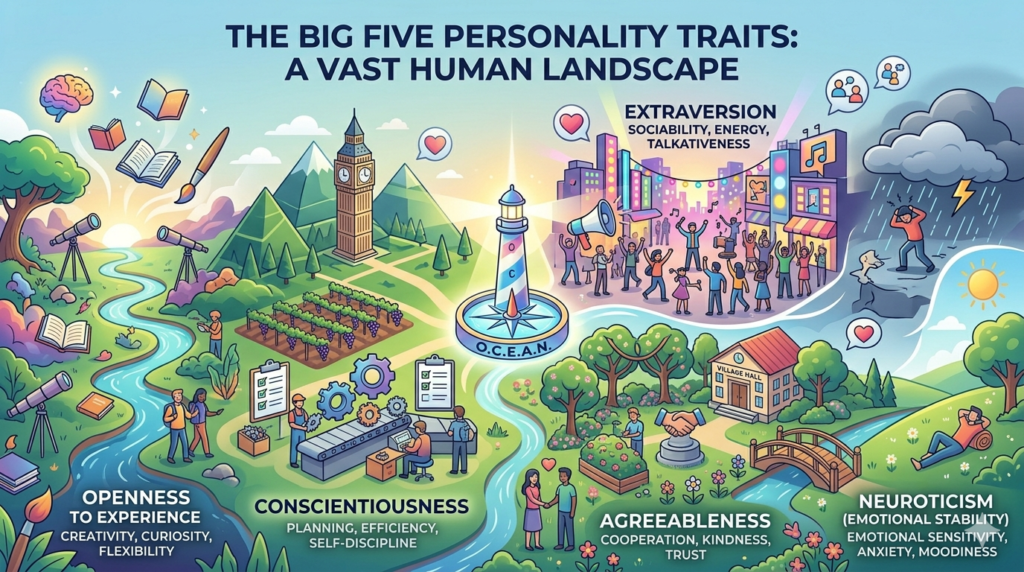
Five broad dimensions that define human personality are the Big Five Personality Traits. These traits are:
- Openness to Experience
- Conscientiousness
- Extraversion
- Agreeableness
- Neuroticism
Every individual possesses these traits in different levels. Some people may score high in one trait and low in another, making every personality unique.
1. Openness to Experience
Openness refers to creativity, curiosity, and willingness to try new things. People who score high in openness are imaginative, adventurous, and open-minded. They enjoy learning new ideas, exploring different cultures, and thinking creatively.
On the other hand, people with low openness prefer routine and familiar experiences. Rather than abstract thought, they may prefer practical approaches and shun abrupt changes.
Characteristics of High Openness
- Creative thinking
- Strong imagination
- Interest in art and culture
- Love for new experiences
2. Conscientiousness
Conscientiousness describes a person’s level of discipline, organization, and responsibility. Highly conscientious individuals are goal-oriented and dependable. They plan their work carefully and complete tasks efficiently.
People with low conscientiousness may struggle with time management and organization. They are often more spontaneous and less structured in daily life.
Characteristics of High Conscientiousness
- Strong self-discipline
- Organized lifestyle
- Responsible behavior
- Good time management
3. Extraversion
Extraversion measures how social and energetic a person is. Extroverts enjoy interacting with people and often feel energized in social settings. They are talkative, confident, and enthusiastic.
Introverts, who score lower in extraversion, usually prefer quiet environments and smaller social circles. They often recharge by spending time alone.
Characteristics of High Extraversion
- Friendly personality
- High energy levels
- Strong communication skills
- Enjoyment of social activities
4. Agreeableness
Agreeableness reflects kindness, empathy, and cooperation. Highly agreeable people are caring, helpful, and compassionate. They value harmony and often avoid conflicts.
Individuals with low agreeableness may appear more competitive or critical. They may prioritize personal goals over group harmony.
Characteristics of High Agreeableness
- Compassionate nature
- Cooperative attitude
- Trustworthy behavior
- Emotional understanding
5. Neuroticism
The amount of emotional stability and stress reaction is assessed via neuroticism. Those with a strong neuroticism may experience emotional insecurity, mood swings, and anxiety more often.
Those with low neuroticism tend to remain calm and emotionally balanced, even in stressful situations.
Characteristics of High Neuroticism
- Frequent stress or anxiety
- Emotional sensitivity
- Mood fluctuations
- Self-doubt
Importance of the Big Five Personality Traits
The Big Five Personality Traits model is valuable in many areas of life. Employers use it during recruitment and team building. Teachers and counselors apply it to understand student behavior and learning styles. Individuals can also use the model for self-improvement and relationship building.
Understanding personality traits helps people:
- Improve communication skills
- Build stronger relationships
- Make better career choices
- Understand emotional behavior
- Develop personal growth strategies
The Big Five Personality Traits provide a scientific and practical way to understand human personality. Each trait influences how people think, feel, and behave in daily life. By learning about openness, conscientiousness, extraversion, agreeableness, and neuroticism, individuals can gain deeper self-awareness and improve their interactions with others.
Whether in personal relationships, education, or professional settings, understanding personality traits can lead to better communication and personal development. The Big Five model remains one of the most trusted and effective tools in modern psychology.
Sherlock Holmes by Sir Arthur Conan Doyle
Byomkesh Bakshi by Sharadindu Bandyopadhyay
Aranyak by Bibhutibhushan Bandopadhyay
Read Also: Education Website Design