

Rare earth metals are critical for modern technology, powering everything from smartphones and electric vehicles to defense systems and renewable energy infrastructure. Despite their global importance, the production and processing of these minerals are heavily concentrated in one country: China. This article explores which country dominates rare earth metals, why that dominance exists, and how other nations are responding.
Global Leader in Rare Earth Production
China is the undisputed leader in rare earth metals production. As of 2024, China produced approximately 270,000 metric tons, accounting for nearly 65–70% of global output.
This level of dominance means China produces more rare earth metals than all other countries combined. The second-largest producer, the United States, produces only about 45,000 metric tons, far behind China.
Other countries like Myanmar, Australia, and Thailand contribute smaller shares, but none come close to matching China’s scale.
Why China Dominates Rare Earth Metals
1. Advanced Processing Capabilities
Rare earth mining is only the first step. The real challenge lies in processing and refining, which requires complex technology and infrastructure. China has invested heavily in this sector for decades, giving it a significant advantage.
China controls around 85–90% of global rare earth processing capacity, making it the central hub of the supply chain.
2. Strong Government Support
The Chinese government has long prioritized rare earth metals as a strategic resource. Policies supporting mining, refining, and export control have strengthened its global position.
3. Cost Efficiency and Scale
China benefits from lower production costs due to economies of scale, labor availability, and established supply chains. This allows it to supply rare earth metals at competitive prices globally.
4. Environmental Trade-offs
Rare earth extraction and processing can cause environmental damage. Many countries have strict regulations, making production expensive. China, historically, has been more flexible in this area, allowing faster industry growth.
Other Major Rare Earth Producers
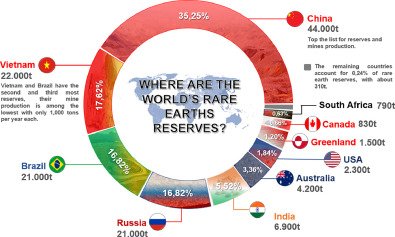
Although China dominates, several countries are emerging as important players:
- United States – Second-largest producer with growing investments in domestic mining.
- Australia – A key supplier with significant reserves and expanding production.
- Myanmar & Thailand – Increasing output in recent years.
- India & Vietnam – Large reserves but relatively low production levels.
These countries are trying to reduce dependence on China by building their own supply chains.
Global Dependence on China
Many industries rely heavily on China for rare earth materials. For example:
- Electric vehicle manufacturers depend on rare earth magnets.
- Renewable energy systems require these metals for wind turbines.
- Defense technologies use rare earth elements in advanced electronics.
Because of this, countries like the United States, Japan, and members of the European Union are actively seeking alternative sources and partnerships.
Efforts to Reduce China’s Dominance
Several nations are working to diversify the rare earth supply chain:
- New mining projects in Australia and the U.S.
- International partnerships for processing facilities
- Investment in recycling technologies
For instance, recent developments show Western countries investing in rare earth processing plants to reduce reliance on China.
Future Outlook
While China remains the dominant force, the global rare earth market is slowly evolving. Increasing demand for clean energy and advanced technology is pushing countries to invest in domestic production and alternative supply chains.
However, due to China’s established infrastructure and expertise, it is likely to remain the leader in rare earth metals for the foreseeable future.
China clearly dominates the global rare earth metals industry due to its massive production capacity, advanced processing technology, and strong government support. Although other countries are trying to catch up, the gap remains significant.
As demand for these critical materials continues to rise, the competition to reduce dependence on China will shape the future of global supply chains.
Discover the Best Telescopes for Amateur Astronomers
Read Also: Education Website Design