
One of the greatest mysteries in human history is the question: Who created the planet?
From ancient scriptures to modern science, people have sought to understand the origin of Earth — our home in the vast universe. While religion attributes creation to a divine power, science provides a fascinating explanation involving cosmic events and natural processes. Let’s explore both perspectives to uncover how the planet we live on came into existence.
The Big Bang and Earth’s Formation
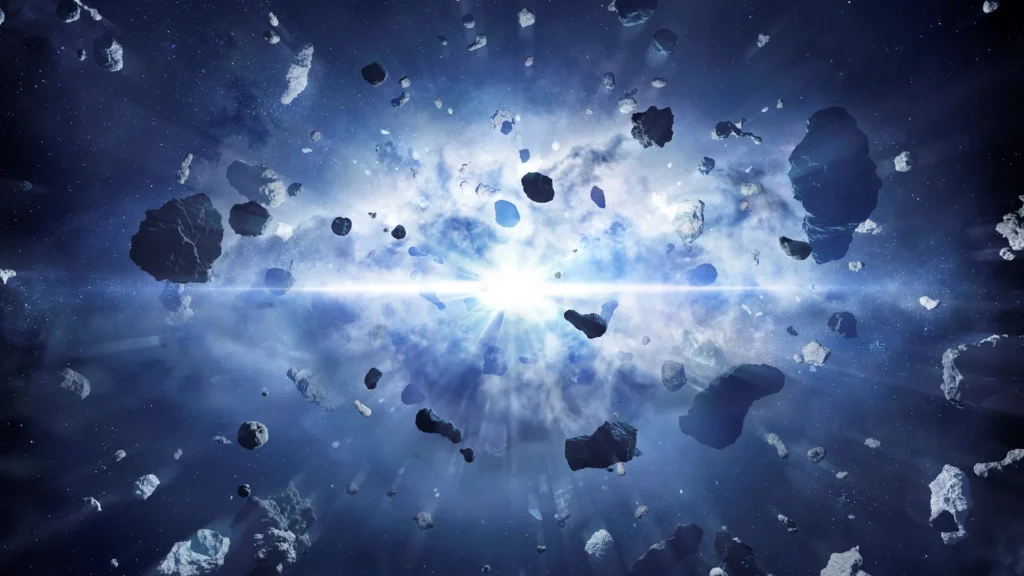
The scientific explanation for the creation of our planet begins nearly 13.8 billion years ago with the Big Bang — an enormous explosion that gave birth to space, time, matter, and energy.
Over billions of years, clouds of gas and dust came together under gravity to form stars and galaxies. Our solar system was born around 4.6 billion years ago when a giant molecular cloud collapsed.
The leftover gas and dust formed a spinning disk, and in the center, the Sun ignited. The remaining material clumped together to form planets, moons, and asteroids. Through this process, Earth emerged as the third planet from the Sun.
From Fire to Life
Initially, Earth was a hot, molten sphere surrounded by violent volcanic eruptions and asteroid impacts. Over millions of years, the planet began to cool down, forming a solid crust and oceans as water vapor condensed.
This period is known as the Hadean Era. Slowly, simple organic molecules began to form, giving rise to the building blocks of life.
Around 3.5 billion years ago, the first microorganisms appeared — marking the beginning of life on Earth. These tiny forms of life evolved over billions of years, eventually giving rise to plants, animals, and humans.
The Divine Creation
While science explains how the planet was formed, religion seeks to explain why it exists. Almost every culture and religion has its own creation story:
- Christianity: The Bible states that God created the Earth in six days, as described in the Book of Genesis. On the third day, He created land, seas, and vegetation; on the fourth, the Sun, Moon, and stars; and on the sixth, living creatures and humans.
- Hinduism: Ancient Hindu texts like the Rig Veda describe the universe’s creation as the work of Lord Brahma, the creator god, who brought order to chaos.
- Islam: The Quran teaches that Allah created the heavens and the Earth in six “days” or stages, emphasizing purpose and balance in creation.
- Greek Mythology: In Greek beliefs, Gaia, the goddess of the Earth, emerged from chaos to give birth to the world and all living things.
These spiritual explanations remind us that beyond science, humans have always sought meaning and purpose in creation.
Two Sides of the Same Mystery
Science and religion often seem to disagree, but both share a deep sense of wonder about existence. Science seeks logical explanations through observation and experimentation, while faith provides moral and spiritual context to our existence.
Many people today find harmony between the two, believing that divine power may have used natural processes like the Big Bang and evolution to create the universe.
A Planet Full of Wonders
Whether you believe in the power of God or the forces of nature, one thing is certain — our planet is an extraordinary creation. It supports life, sustains beauty, and reminds us of the vastness of the cosmos.
The question of who created the planet may never have a single answer, but it continues to inspire curiosity, faith, and exploration. As science advances and human understanding grows, the mystery of Earth’s creation will always remain a story worth exploring.
Discover the Best Telescopes for Amateur Astronomers
Read Also: Education Website Design