
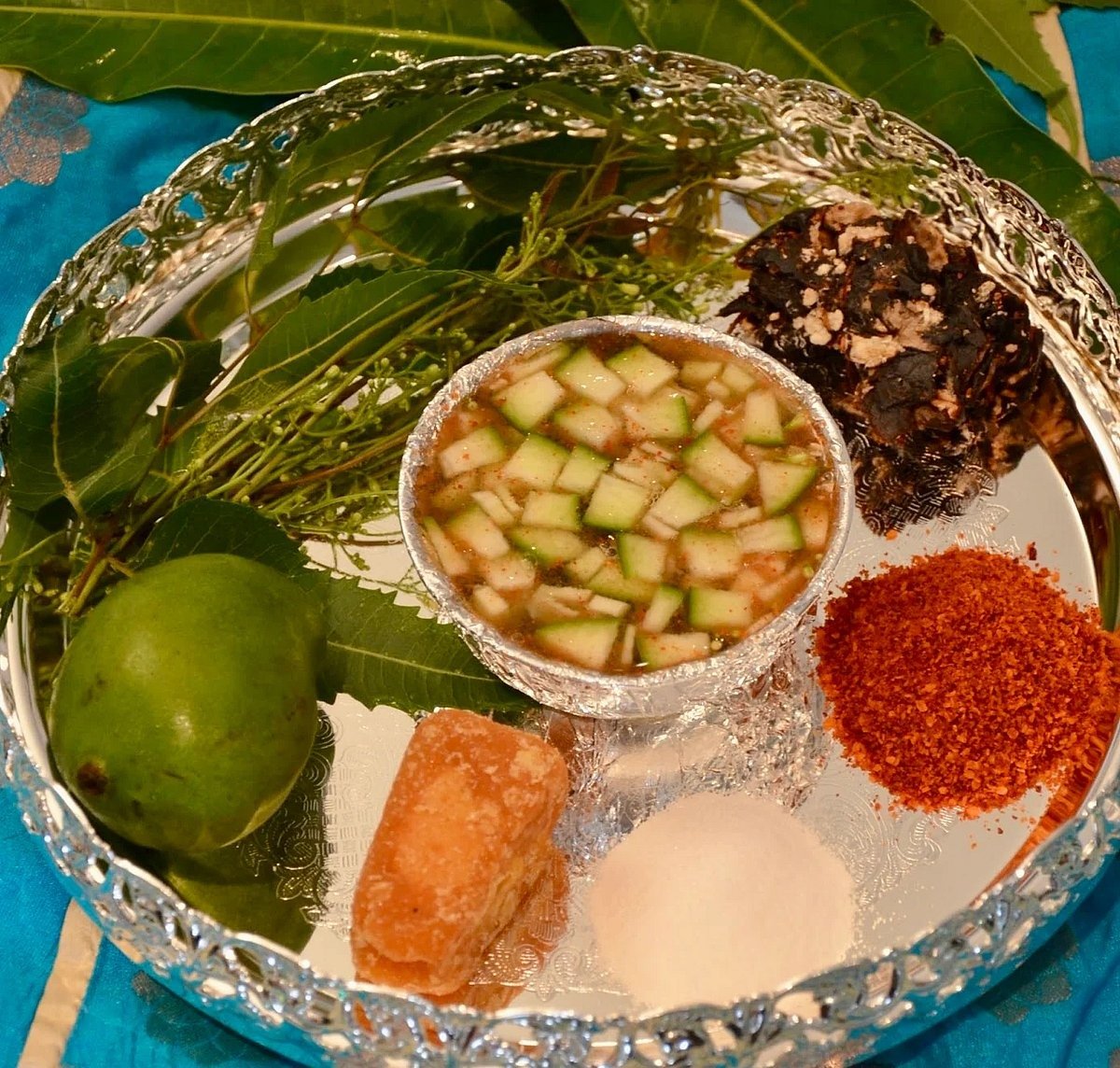
Ugadi Pachadi is more than just a festive recipe—it is a profound cultural symbol that captures the essence of life itself. Prepared during Ugadi, the New Year festival celebrated in Andhra Pradesh, Telangana, and Karnataka, this traditional dish represents the philosophy of accepting life in all its forms. With a unique blend of six distinct tastes, Ugadi Pachadi teaches an important life lesson through food.
What Is Ugadi Pachadi?
Ugadi Pachadi is a traditional South Indian chutney-like preparation made using six ingredients, each representing a different taste and emotion. Unlike regular dishes, it is not meant to be sweet or savory alone but a harmonious mix of flavors. This dish is prepared first thing on Ugadi morning and is offered to deities before being consumed by family members.
The combination of tastes reflects the belief that life is a mixture of joy, sorrow, anger, fear, surprise, and disgust—experiences that one must embrace with balance and grace.
The Six Ingredients and Their Meaning

Each ingredient used in Ugadi Pachadi has a symbolic significance:
- Jaggery (Sweet – Madhuram): Represents happiness and joy
- Neem Flowers (Bitter – Tikta): Symbolize sadness and challenges
- Green Chilies (Spicy – Katu): Indicate anger and intensity
- Salt (Salty – Lavana): Stands for fear and concern
- Tamarind (Sour – Amla): Represents surprise and new experiences
- Raw Mango (Tangy/Astringent – Kashaya): Symbolizes disgust or unpleasant moments
Together, these flavors remind us that no single emotion defines life; it is the balance of all experiences that makes it meaningful.
Cultural and Spiritual Significance of Ugadi Pachadi
Ugadi Pachadi holds deep spiritual importance in Hindu tradition. It is believed that tasting this dish at the start of the New Year prepares the mind to accept whatever the coming year brings. The inclusion of neem flowers, known for their medicinal properties, also reflects the ancient Indian practice of blending health with spirituality.
In many households, elders explain the meaning of each taste to children, making Ugadi Pachadi an educational and emotional tradition passed down through generations.
Health Benefits of Ugadi Pachadi
Beyond symbolism, Ugadi Pachadi offers several health benefits:
- Neem flowers help boost immunity and aid digestion
- Jaggery is rich in iron and improves energy levels
- Tamarind supports digestion and metabolism
- Raw mango is high in vitamin C
This dish aligns with Ayurvedic principles, helping cleanse the body and prepare it for seasonal changes.
How Ugadi Pachadi Is Traditionally Prepared
Ugadi Pachadi is simple to prepare and does not require cooking. Finely chopped raw mango, green chilies, and neem flowers are mixed with tamarind pulp, jaggery syrup, and salt. The ingredients are gently blended to ensure no single taste dominates the others.
The key is balance—just like life.
Why Ugadi Pachadi Is Relevant Even Today
In today’s fast-paced world, Ugadi Pachadi serves as a gentle reminder to stay grounded. It encourages acceptance, resilience, and mindfulness—values that are increasingly important in modern life. This timeless dish continues to hold relevance, not just as a festive tradition but as a philosophical guide.
Ugadi Pachadi is a beautiful blend of taste, tradition, and wisdom. It transforms a simple recipe into a powerful message about life’s unpredictability and balance. As families gather to celebrate Ugadi, this symbolic dish remains at the heart of the festival, reminding everyone to welcome the New Year with openness and positivity.
State Wise Food Culture in India
Worldwide Famous Spices of India
Read Aslo: Recipe Cuisine