Scientific inventions have always shaped the progress of human civilization. From electricity to vaccines and from computers to space exploration, our world today stands on the foundation of the groundbreaking work done by scientists across different countries. This article highlights some of the most influential scientists and their inventions worldwide, showcasing how their contributions continue to transform society.
1. The Importance of Scientific Inventions
Scientific inventions play a crucial role in improving the quality of life. They help solve real-world problems, promote technological development, and pave the way for future discoveries. Whether in medicine, physics, chemistry, or technology, scientists continue to push the boundaries of human knowledge. Their inventions not only create opportunities but also inspire future generations to explore, experiment, and innovate.
2. Thomas Edison – The Wizard of Electricity
One of the most famous American inventors, Thomas Edison, changed the world with his remarkable inventions. His most well-known innovation is the electric light bulb, which made indoor lighting accessible and affordable. Edison also invented the phonograph, motion picture camera, and contributed to the development of the electric power industry. His work laid the foundation for modern electrical systems still used worldwide.
3. Alexander Graham Bell – Inventor of the Telephone
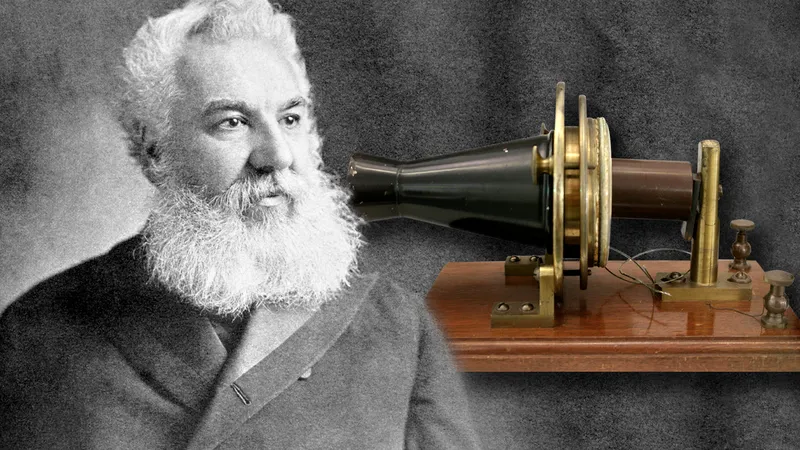
Scottish-born scientist Alexander Graham Bell revolutionized communication with the invention of the telephone in 1876. His device made it possible for voices to travel across long distances, reshaping global communication forever. Bell’s research in sound technology also helped advance hearing devices, showcasing his dedication to improving human interaction.
4. Marie Curie – Pioneer of Radioactivity
Polish-French scientist Marie Curie is celebrated for her discoveries in radioactivity, a term she coined. She was the first woman to win a Nobel Prize and the only person to receive Nobel Prizes in two different sciences — Physics and Chemistry. Her inventions and research led to the development of X-ray machines and cancer treatments, making her one of the most influential scientists in medical science.
5. Albert Einstein – The Genius of Modern Physics
German-born physicist Albert Einstein changed our understanding of the universe with his Theory of Relativity. The connection between mass and energy was shown by his well-known formula, E = mc². Einstein’s inventions and theories contributed to the development of nuclear energy, quantum mechanics, and modern physics. His work continues to influence scientific research worldwide.
6. Nikola Tesla – Master of Alternating Current
Serbian-American inventor Nikola Tesla played a critical role in the creation of the alternating current (AC) power system, which is now used globally to transmit electricity over long distances. Tesla also invented the Tesla Coil, wireless technologies, and contributed to the early development of robotics and radio. His futuristic ideas have made him a symbol of innovation.
7. Wright Brothers – Inventors of the Airplane
American brothers Orville and Wilbur Wright invented the first successful airplane in 1903. Their innovation marked the beginning of modern aviation, making global travel faster and more efficient. Today, airplanes have become an essential mode of transportation, connecting countries and cultures across continents.
8. Isaac Newton – Discoverer of Gravity
English scientist Sir Isaac Newton is known for formulating the laws of motion and the law of universal gravitation. His revolutionary ideas laid the foundation for classical physics and influenced countless scientific advancements. Newton’s inventions, such as the reflecting telescope, further contributed to astronomy and optics.
9. Modern-Day Scientists Inspiring the Future
Today’s scientists continue to break new ground. Innovators like Elon Musk, Tim Berners-Lee (inventor of the World Wide Web), and Katalin Karikó (mRNA vaccine pioneer) are shaping the future of technology, space travel, and medicine. Their inventions reflect the limitless potential of human creativity.
Scientists and their inventions have transformed the world in extraordinary ways. From electricity and telephones to vaccines and the internet, their contributions are the backbone of modern society. As we move forward, scientific innovation will continue to drive progress and inspire new generations to explore the mysteries of the universe.
What Happens After the Death of a Human
Survival of the Fittest Theory by Charles Darwin
Read Also: Education Website Design