
The inclusion of Tibet into the People’s Republic of China has been a topic of international debate for decades. Understanding the historical, political, and social context helps explain how China integrated Tibet and why it remains a sensitive issue today.
Historical Background of Tibet
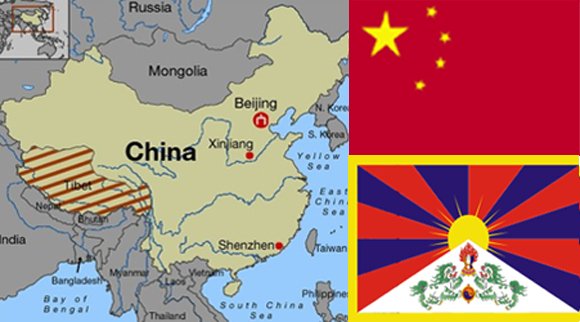
Tibet, often referred to as the “Roof of the World,” has a rich history and unique cultural identity. For centuries, Tibet maintained a distinct religious and political system, governed by the Dalai Lama and regional rulers. Geographically isolated by the Himalayas, Tibet developed its own traditions, language, and governance, which kept it largely independent from neighboring powers.
In the early 20th century, Tibet enjoyed a period of de facto independence following the fall of the Qing dynasty in China. However, the collapse of central authority in China left the Tibetan region vulnerable to foreign and domestic influences, setting the stage for its later integration into China.
China’s Claim Over Tibet
China’s government bases its claim on historical ties between Tibet and previous Chinese dynasties. The Qing dynasty, in particular, maintained a form of administrative oversight in Tibet through political and religious arrangements, which modern China interprets as a historical basis for sovereignty. While Tibet had periods of autonomy, China argues that Tibet has been a part of its territory for centuries.
The 1950 Military Intervention
The turning point in Tibet’s integration came in 1950 when the People’s Liberation Army (PLA) entered Tibet. The Chinese government describes this event as a “peaceful liberation,” aimed at ending feudalism and foreign influence in Tibet. Critics, however, view it as a military invasion. The entry of Chinese forces marked the beginning of formal control over the region, fundamentally changing Tibet’s political landscape.
The Seventeen Point Agreement
In 1951, the Seventeen Point Agreement was signed between representatives of Tibet and China. The agreement recognized Chinese sovereignty over Tibet while promising autonomy and protection of local customs, religion, and governance. Despite the promises, tensions arose as Beijing gradually increased its influence, leading to dissatisfaction among Tibetan leaders and citizens.
Tibetan Resistance and the 1959 Uprising
The growing Chinese presence led to resistance in Tibet, culminating in the 1959 uprising. The revolt was met with a strong military response from China. The Dalai Lama fled to India, establishing a government-in-exile. This event solidified China’s control over Tibet and initiated policies aimed at integrating Tibet politically, economically, and socially into China.
Economic and Social Integration
After the 1959 uprising, China implemented development programs in Tibet, including infrastructure projects, education initiatives, and healthcare improvements. These efforts aimed to modernize the region and bring it closer to the national framework. While these measures brought economic growth, they also fueled debates about cultural assimilation and the preservation of Tibetan identity.
Current Status of Tibet
Today, Tibet is an autonomous region of China, known as the Tibet Autonomous Region (TAR). The Chinese government continues to emphasize modernization and national unity, while international organizations and Tibetan activists call for greater autonomy and cultural protection. Tibet remains a symbol of the complex relationship between historical sovereignty, cultural identity, and modern political control.
The inclusion of Tibet into China is a result of historical claims, military intervention, political agreements, and ongoing integration policies. While China views it as a liberation and modernization effort, critics argue that Tibet’s autonomy and cultural identity have been compromised. Understanding this history is crucial for anyone interested in the geopolitical dynamics of Asia and the ongoing debates surrounding Tibet’s status.
What Happens After the Death of a Human
Survival of the Fittest Theory by Charles Darwin
Read Also: Education Website Design