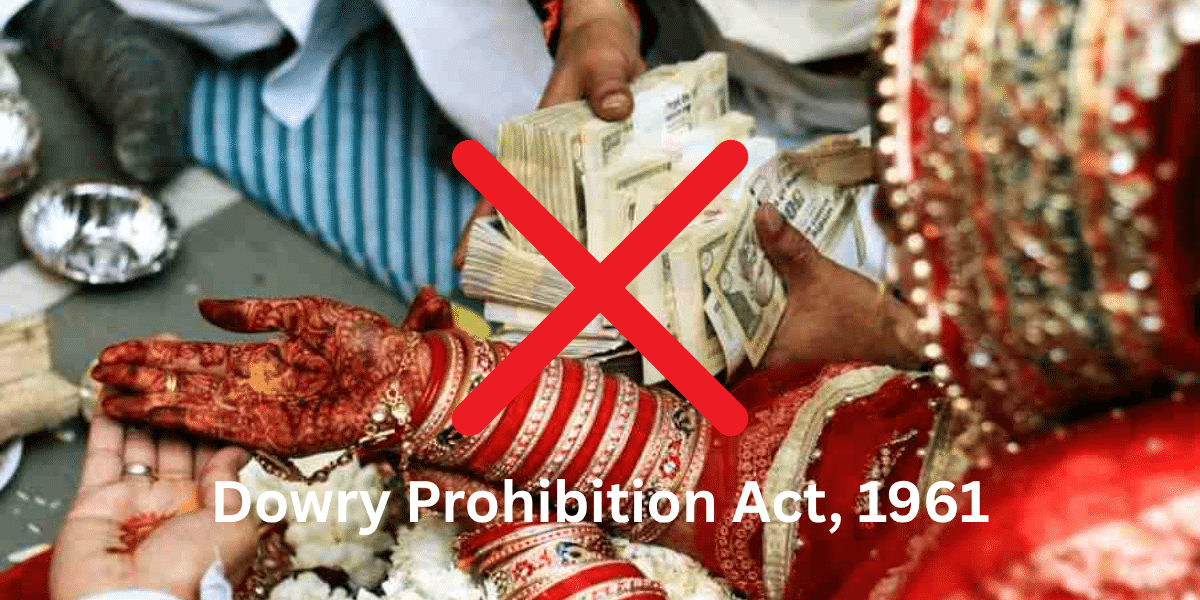
Dowry has been a deep-rooted social evil in India for centuries, often leading to exploitation, harassment, and even death of women. To combat this menace, the Dowry Prohibition Act, 1961 was enacted by the Government of India. This law aims to prohibit the giving and taking of dowry and safeguard women from being subjected to cruelty due to dowry-related demands. Despite multiple amendments and strict provisions, dowry cases are still prevalent, highlighting the need for awareness and stricter enforcement of the law.
What is the Dowry Prohibition Act, 1961?
The Dowry Prohibition Act, 1961 makes it illegal to give or take dowry in India. Dowry is defined as any property, valuable security, or gift demanded directly or indirectly from the bride or her family by the groom or his relatives as a condition of marriage.
The Act came into effect on 1st July 1961 and was later amended in 1984 and 1986 to strengthen its provisions. Its primary goal is to eliminate the practice of dowry, which has been a major cause of violence and discrimination against women.
Key Provisions of the Act
- Prohibition of Dowry
- The Act prohibits the giving or taking of dowry before, during, or after marriage.
- Any demand for dowry is considered unlawful.
- Punishment for Giving or Taking Dowry
- A minimum imprisonment of 5 years and a fine of ₹15,000 or the amount of dowry taken (whichever is higher).
- Ban on Dowry Demands
- Even asking for dowry, without actual exchange, is a punishable offense.
- Dowry Death (Section 304B of IPC)
- If a woman dies under suspicious circumstances within 7 years of marriage due to dowry harassment, it is termed a dowry death.
- The husband and his relatives can be held directly responsible.
- Cruelty Against Women (Section 498A of IPC)
- Any cruelty, harassment, or violence related to dowry demands is punishable under Section 498A.
Importance of the Dowry Prohibition Act
The Act plays a crucial role in:
- Protecting Women’s Rights: It shields women from harassment and abuse linked to dowry demands.
- Promoting Gender Equality: By discouraging dowry, it helps reduce the financial burden on the bride’s family and promotes equality in marriage.
- Deterring Dowry Deaths: Strict provisions under the law aim to reduce dowry-related violence and deaths.
- Legal Awareness: It empowers women and families to take legal action against perpetrators.
Challenges in Implementation

Despite strict laws, dowry continues to exist in India due to:
- Social Mindset: Many families consider dowry as a tradition or status symbol.
- Lack of Reporting: Fear of social stigma and family pressure prevents women from filing complaints.
- Weak Enforcement: Corruption and lengthy judicial processes delay justice.
- Misuse of Law: In some cases, false dowry complaints are filed, creating mistrust.
Steps to Strengthen the Law
To make the Dowry Prohibition Act more effective:
- Awareness Campaigns should be conducted to educate people about the legal consequences of dowry.
- Speedy Trials must be ensured in dowry-related cases.
- Stricter Monitoring by authorities is needed to curb the practice at the grassroots level.
- Women Empowerment through education, employment, and financial independence can reduce their vulnerability to dowry harassment.
The Dowry Prohibition Act, 1961 in India was a landmark step in eradicating the evil practice of dowry. While the law provides strong punishments for offenders, the persistence of dowry in society highlights the need for cultural change alongside legal measures. Empowering women, spreading awareness, and strict enforcement of the law can create a society free from dowry-related crimes, ensuring dignity and equality for women in marriages.
Protection of Children from Sexual Offences
Different Types of Cyber Crimes for Awareness
Read Also: Law Websites