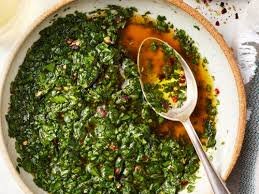
Chimichurri is a vibrant, herb-forward sauce known for its bold flavor and versatility. Originating in Argentina and Uruguay, chimichurri has become a global favorite for adding freshness and depth to grilled meats, vegetables, and more. With its bright green color and punchy taste, this sauce proves that simple ingredients can deliver unforgettable results.
What Is Chimichurri?

Chimichurri is a cold sauce made primarily from fresh parsley, garlic, olive oil, vinegar, and oregano. Some variations also include cilantro, red pepper flakes, or lemon juice. Unlike cooked sauces, chimichurri is mixed fresh, preserving the natural flavors of its ingredients.
The sauce is known for its balanced profile—herby, tangy, garlicky, and slightly spicy. It’s traditionally served with grilled beef but has evolved into a versatile condiment enjoyed worldwide.
The Origins of Chimichurri
The roots of chimichurri trace back to South America, particularly Argentina, where it became a staple in asado culture. Asado, a traditional style of grilling, relies on high-quality meat cooked simply, and chimichurri provides the perfect contrast with its bright acidity and herbs.
While the exact origin of the name is debated, chimichurri has long symbolized communal meals and outdoor cooking, making it deeply tied to culinary tradition and hospitality.
Why Chimichurri Is So Popular
One reason chimichurri has gained international popularity is its versatility. It enhances food without overpowering it, making it suitable for a wide range of dishes. The sauce is naturally gluten-free, dairy-free, and adaptable to many dietary preferences.
Its fresh ingredients also align with modern cooking trends that emphasize clean, bold flavors. Whether used as a marinade, topping, or dip, chimichurri adds instant character to any meal.
Common Uses for Chimichurri
While traditionally paired with steak, chimichurri works beautifully with many foods. Popular uses include:
- Spoon over grilled or roasted meats
- Drizzle on chicken, fish, or shrimp
- Toss with roasted vegetables or potatoes
- Spread on sandwiches and wraps
- Use as a marinade or salad dressing base
A small amount goes a long way, making chimichurri both flavorful and economical.
Green Chimichurri vs. Red Chimichurri
The most well-known version is green chimichurri, made with parsley and garlic. However, red chimichurri is another popular variation. Red chimichurri includes ingredients like paprika, red chili, or roasted red peppers, giving it a deeper color and smoky flavor.
Both versions share the same bold personality but offer slightly different taste experiences, allowing cooks to choose based on the dish.
Tips for Making Chimichurri at Home
Homemade chimichurri is quick and easy to prepare. Finely chopping herbs by hand rather than using a food processor helps preserve texture. Using high-quality olive oil and fresh garlic enhances flavor significantly.
Letting the sauce rest for at least 15 minutes allows the flavors to meld, but chimichurri should remain fresh and vibrant. It’s best stored in the refrigerator and used within a few days.
Health Benefits of Chimichurri
Chimichurri isn’t just flavorful—it’s also nutritious. Fresh herbs provide antioxidants and vitamins, while olive oil contains healthy fats. Because it’s not cooked, the ingredients retain their nutritional value.
Its bold taste can also reduce the need for heavy sauces or excess salt, making it a healthier alternative for flavor enhancement.
Chimichurri is more than a sauce—it’s a celebration of fresh ingredients and simple preparation. Its bold, zesty flavor transforms ordinary dishes into memorable meals. Whether you’re grilling outdoors or cooking indoors, chimichurri offers an easy way to bring brightness and authenticity to your food.Once you try it, this classic sauce is sure to become a staple in your kitchen.