Artificial Intelligence (AI) and Machine Learning (ML) are two of the most powerful technologies shaping the modern digital era. From smart assistants and recommendation systems to healthcare diagnostics and autonomous vehicles, AI and ML are transforming how businesses operate and how people interact with technology. Understanding these technologies is essential for individuals and organizations looking to stay competitive in today’s fast-evolving world.
What Is Artificial Intelligence (AI)?
Artificial Intelligence refers to the ability of machines or computer systems to perform tasks that typically require human intelligence. These tasks include problem-solving, decision-making, speech recognition, image processing, and language translation. AI systems are designed to mimic human cognitive functions and improve performance over time.
AI can be broadly classified into two types. Narrow AI focuses on specific tasks, such as voice assistants like Siri or Alexa. General AI, which is still theoretical, aims to replicate full human intelligence. Today, most real-world applications rely on narrow AI, powered heavily by machine learning algorithms.
Understanding Machine Learning (ML)
Machine Learning is a subset of Artificial Intelligence that enables machines to learn from data without being explicitly programmed. Instead of following predefined rules, ML models analyze large datasets, identify patterns, and make predictions or decisions based on learned insights.
There are three main types of machine learning:
- Supervised Learning: Uses labeled data to train models, commonly used for spam detection and price prediction.
- Unsupervised Learning: Works with unlabeled data to discover hidden patterns, such as customer segmentation.
- Reinforcement Learning: Learns through trial and error, widely used in robotics and game development.
Machine learning plays a crucial role in making AI systems smarter, more adaptive, and efficient.
Key Differences Between AI and Machine Learning
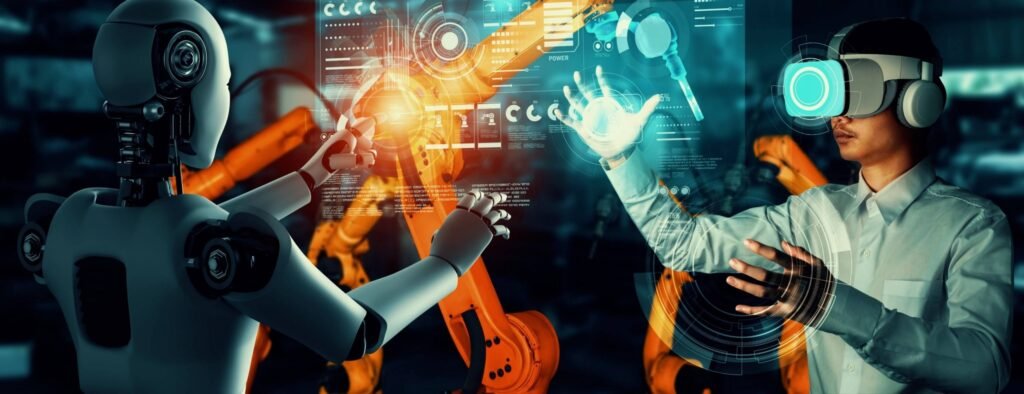
Although often used interchangeably, AI and ML are not the same. Artificial Intelligence is a broader concept focused on creating intelligent machines, while Machine Learning is a specific approach used to achieve AI. In simple terms, AI is the goal, and ML is one of the tools used to reach that goal.
AI systems may use rule-based logic, whereas ML systems rely on data and statistical models. Together, they create powerful solutions capable of handling complex real-world problems.
Applications of AI and Machine Learning
AI and machine learning are widely used across multiple industries:
- Healthcare: Individualized treatment strategies, medical imaging analysis, and disease prediction.
- Finance: Fraud detection, algorithmic trading, and credit scoring.
- E-commerce: Product recommendations, customer behavior analysis, and dynamic pricing.
- Education: Personalized learning platforms and automated assessments.
- Transportation: Self-driving cars, traffic management, and route optimization.
These applications improve efficiency, reduce human error, and enhance user experiences.
Benefits of AI and Machine Learning
The adoption of AI and ML offers several advantages:
- Automation of repetitive tasks
- Faster and more accurate decision-making
- Improved customer experience
- Data-driven insights and predictions
- Cost and time efficiency
Businesses leveraging AI and machine learning gain a significant competitive advantage in the digital marketplace.
Challenges and Ethical Considerations
Despite their benefits, AI and machine learning also present challenges. Data privacy, algorithmic bias, lack of transparency, and job displacement are major concerns. Ethical AI development requires responsible data usage, unbiased training datasets, and clear governance policies.
Organizations must balance innovation with ethical responsibility to ensure sustainable AI growth.
The Future of AI and Machine Learning
The future of Artificial Intelligence and Machine Learning is promising. Advancements in deep learning, natural language processing, and generative AI are expanding the possibilities even further. As data availability and computing power continue to grow, AI systems will become more intelligent, reliable, and human-like.
AI and machine learning are revolutionizing industries and redefining how technology interacts with society. Embracing these technologies today will shape a smarter and more innovative tomorrow.
Effects of AI in Upcoming Technology
Manhole – Essential Access Points in Urban Infrastructure
RCPC Manhole Covers and Frames
Read Also: Social Network Website Design