Interpersonal conflict is a natural part of human relationships. Differences in opinions, expectations, communication styles, and personal values can create tension at home, in friendships, or at work. However, conflict does not always have to damage relationships. With the right approach, disagreements can become opportunities for understanding, growth, and stronger connections. Learning effective frameworks for graceful interpersonal conflict resolution can help people handle difficult conversations with patience, empathy, and confidence.
Understanding the Nature of Conflict
Before resolving a disagreement, it is important to understand what is actually causing it. Many conflicts are not simply about the issue being discussed. They may involve unmet expectations, misunderstandings, emotional stress, or feelings of being ignored or disrespected.
A useful first step is to separate the person from the problem. Instead of viewing someone as the source of the conflict, focus on the specific behavior, situation, or misunderstanding that needs attention. This mindset reduces blame and makes constructive communication easier.
The Pause-and-Reflect Framework
Strong emotions can make productive communication difficult. When frustration or anger takes control, people may say things they later regret. The pause-and-reflect framework encourages individuals to slow down before responding.
Take a moment to identify what you are feeling and why. Ask yourself whether your reaction is based on the current situation or influenced by previous experiences. A short pause can create enough emotional space to choose a thoughtful response rather than reacting impulsively.
The Listen-Understand-Respond Model
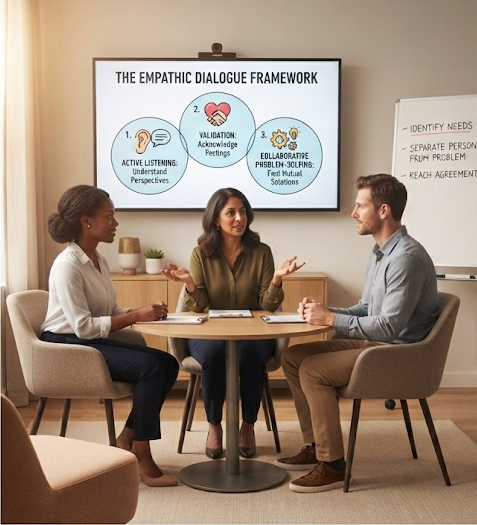
Active listening is one of the most effective tools for resolving interpersonal disagreements. Instead of preparing a counterargument while the other person is speaking, focus on understanding their perspective.
The process can be divided into three stages: listen, understand, and respond. Listen without interrupting, clarify what the other person means, and then respond calmly. Questions such as “Can you explain what concerned you?” or “Did I understand you correctly?” can prevent assumptions from escalating the conflict.
Using “I” Statements
Communication becomes less confrontational when people describe their own experiences rather than assigning blame. “I” statements are particularly useful in difficult conversations.
For example, saying “I felt overlooked when my suggestion was dismissed” communicates a personal experience. Saying “You never listen to me” creates a direct accusation. The first approach encourages dialogue, while the second can make the other person defensive.
Finding Common Ground

Another important conflict resolution framework is identifying shared goals. Even when two people disagree about how something should be handled, they may still want the same outcome.
For example, coworkers may disagree about how to complete a project but both want the project to succeed. Recognizing this common objective shifts the conversation from “Who is right?” to “What solution works for both of us?”
The Compromise and Collaboration Approach
Not every conflict can be solved by one person getting exactly what they want. Healthy conflict resolution often requires flexibility. Compromise involves finding a solution where each person makes reasonable adjustments.
Collaboration goes a step further by searching for a solution that addresses the important needs of everyone involved. This approach may require creativity, patience, and several rounds of discussion, but it can produce more sustainable outcomes.
Practicing Empathy and Respect
Graceful conflict resolution depends heavily on empathy. You do not have to agree with someone’s position to recognize that their feelings are real and meaningful to them.
Respectful communication means avoiding insults, threats, sarcasm, personal attacks, and unnecessary criticism. Maintaining a calm tone can help preserve trust even when the disagreement is serious.
Knowing When to Take a Break
Sometimes the most productive response is to temporarily step away. If emotions become overwhelming, continuing the conversation may make matters worse. Politely requesting a break gives everyone an opportunity to calm down and reconsider their position.
The important part is to return to the conversation when possible rather than using silence as a punishment.
Building Better Relationships Through Conflict
Effective interpersonal conflict resolution is not about eliminating every disagreement. It is about learning how to navigate differences without destroying respect and trust. By practicing active listening, emotional awareness, empathy, clear communication, compromise, and collaboration, people can transform difficult conversations into opportunities for stronger relationships.
Ultimately, graceful conflict resolution requires patience and a willingness to understand before seeking to be understood. When disagreements are approached with respect and a solution-focused mindset, conflict can become a pathway toward healthier and more resilient relationships.
Freelancerson.com a Free Marketplace for Freelancers and Clients
Read Also: Job Seeker Website Portal