
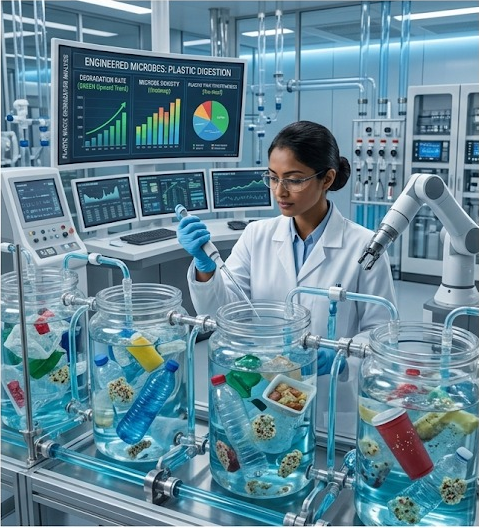
Plastic and chemical waste has become one of the most difficult environmental challenges of the modern world. Conventional recycling and treatment methods can be expensive, energy-intensive, or ineffective against certain complex materials. Scientists are therefore exploring an innovative approach: engineered microbes for plastic and chemical waste. By modifying microorganisms or the enzymes they produce, researchers hope to create biological systems capable of breaking down stubborn pollutants and converting waste into useful materials.
What Are Engineered Microbes?
Engineered microbes are microorganisms whose biological capabilities have been deliberately modified using biotechnology. Scientists can adjust their genetic or metabolic pathways so they produce particular enzymes, consume specific compounds, or transform unwanted substances into safer or more valuable products.
Microbial plastic degradation has attracted considerable attention because some naturally occurring microorganisms already possess enzymes capable of attacking certain polymers. Researchers can improve these natural abilities through protein engineering, metabolic engineering, and synthetic biology. Recent research has identified numerous plastic-active enzymes, although highly efficient biological degradation remains difficult for several common plastics.
How Microbes Can Break Down Plastic
Different plastics require different biological strategies. Polyethylene terephthalate (PET) is one of the most studied examples. Scientists discovered Ideonella sakaiensis, a bacterium capable of using PET-related compounds as a carbon source. Its PETase and MHETase enzymes help break PET into smaller chemical components.
Through genetic and protein engineering, researchers can attempt to make these enzymes more stable, active, or suitable for industrial conditions. Engineered microorganisms may then act as biological factories, helping transform plastic-derived compounds into reusable chemicals or other valuable products.
This concept moves beyond simply destroying waste. Instead, it supports a circular economy, where materials recovered from discarded plastic can potentially become starting ingredients for new products.
Tackling Chemical Waste with Biotechnology
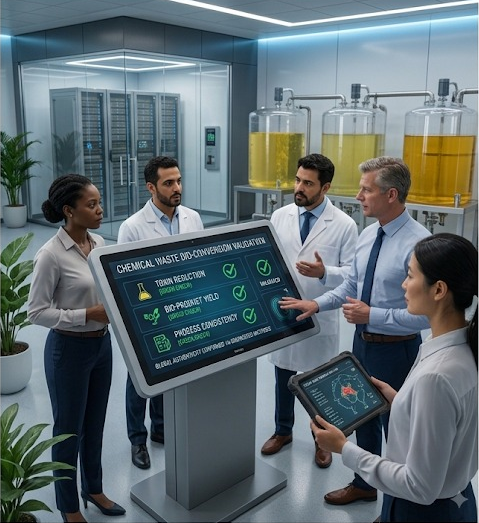
The potential of engineered microbes extends beyond plastic pollution. Industrial facilities generate a wide variety of chemical wastes, including organic compounds that can be difficult to treat using conventional methods. Microorganisms naturally possess diverse metabolic pathways that allow them to transform many chemicals.
With careful engineering, researchers can develop microbial systems with improved abilities to process particular pollutants. These systems could eventually support wastewater treatment, contaminated-site cleanup, and industrial waste management. Rather than relying entirely on harsh chemical treatments, biological processes may offer more selective and potentially lower-impact alternatives.
Benefits of Engineered Microbial Systems
One major advantage is specificity. An engineered microorganism can potentially be designed to target a particular compound or waste stream. Biological processes can also operate under relatively moderate conditions compared with some conventional industrial treatments.
Another important benefit is the possibility of combining waste removal with resource recovery. Instead of converting plastic or chemical waste into an unusable residue, engineered microbes could help turn waste molecules into useful chemicals, fuels, or biological materials.
Researchers are also investigating microbial consortia, enzyme engineering, and advanced genetic technologies to improve performance.
Challenges and Safety Concerns
Despite its promise, engineered microbial waste treatment is not yet a universal solution. Many plastics, particularly highly resistant polymers such as polyethylene and polypropylene, remain challenging to biodegrade efficiently. Laboratory results may also be difficult to reproduce under real environmental conditions involving temperature changes, mixed waste, limited nutrients, and contaminants.
Safety and regulation are equally important. Engineered microorganisms must be carefully evaluated before environmental deployment to reduce ecological risks and prevent unintended biological effects. Containment, monitoring, and regulatory oversight will therefore be essential for responsible development.
The Future of Microbial Waste Management
The future of engineered microbes for plastic and chemical waste lies in combining biology with advanced biotechnology. Better enzymes, improved microbial hosts, artificial microbial communities, and data-driven discovery could make biological waste treatment more efficient.
While engineered microbes are not a replacement for reducing waste and improving conventional recycling, they could become an important part of a broader sustainability strategy. As research progresses, these microscopic organisms may help transform some of today’s hardest waste problems into opportunities for resource recovery and a more circular economy.
Effects of AI in Upcoming Technology
Manhole – Essential Access Points in Urban Infrastructure
RCPC Manhole Covers and Frames
Read Also: Social Network Website Design