Chromosomes and genetic biological sex are fundamental concepts in human biology and genetics. They determine many aspects of human development, including reproductive characteristics and inherited traits. While biological sex is primarily influenced by chromosomes, modern genetics has revealed that the process is more complex than simply having XX or XY chromosomes. Understanding how chromosomes work helps us better appreciate human diversity, inheritance, and medical science.
This article explores chromosomes, genetic biological sex, and the important role genetics plays in human development.
What Are Chromosomes?
Chromosomes are thread-like structures found inside the nucleus of nearly every cell in the human body. They are made of DNA (deoxyribonucleic acid) and proteins called histones. DNA contains thousands of genes, which carry the instructions needed for growth, development, and normal body functions.
The normal human chromosomal count is 46, divided into 23 pairs. Each parent contributes one chromosome to each pair, meaning a child inherits half of their genetic material from their mother and the other half from their father.
Among these 23 pairs:
- 22 pairs are autosomes, responsible for most inherited physical and biological traits.
- 1 pair consists of sex chromosomes, which play a significant role in determining genetic biological sex.
Understanding Genetic Biological Sex
Genetic biological sex is generally determined at fertilization by the combination of sex chromosomes inherited from the parents.
The mother always contributes an X chromosome through her egg. The father contributes either an X chromosome or a Y chromosome through his sperm.
The combinations are:
- XX – Typically results in female biological development.
- XY – Typically results in male biological development.
Since the father’s sperm determines whether an X or Y chromosome is passed on, it is the paternal chromosome that usually determines the genetic biological sex of the child.
The Role of the Y Chromosome
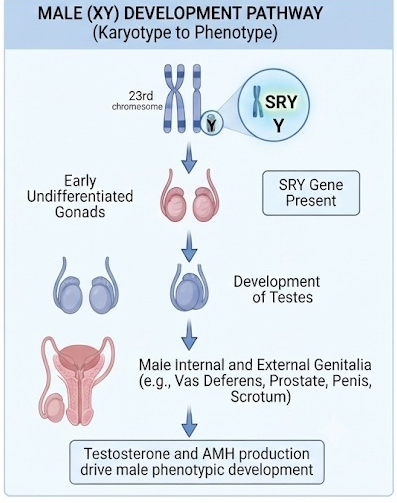
The Y chromosome contains a crucial gene known as the SRY (Sex-determining Region Y) gene. This gene acts as a developmental switch that usually initiates the formation of testes during early fetal development.
Once activated, the developing testes produce hormones such as testosterone, which influence the development of male reproductive organs and secondary sexual characteristics.
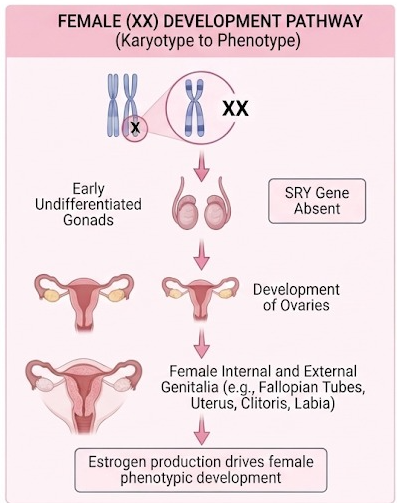
If the SRY gene is absent, as is typically the case in individuals with XX chromosomes, embryonic development generally follows the pathway associated with female reproductive anatomy.
Variations in Chromosomes
Although XX and XY are the most common chromosome patterns, nature includes several naturally occurring chromosomal variations. These variations can occur due to differences during cell division before birth.
Examples include:
- Turner syndrome (XO): Individuals have one X chromosome instead of two sex chromosomes.
- Klinefelter syndrome (XXY): Individuals have an extra X chromosome along with a Y chromosome.
- Triple X syndrome (XXX): Individuals have three X chromosomes.
- XYY syndrome: Individuals have one X chromosome and two Y chromosomes.
These variations are relatively uncommon and demonstrate that biological development can involve a wider range of genetic patterns.
Why Chromosomes Matter in Genetics
Chromosomes carry genes that influence countless inherited characteristics, including:
- Eye color
- Hair color
- Blood type
- Height potential
- Metabolism
- Certain inherited medical conditions
Genetic testing allows healthcare professionals to identify chromosome-related conditions, understand inherited diseases, and provide valuable information for diagnosis, treatment planning, and family counseling.
Advances in genomic research have also improved our understanding of genetic disorders, personalized medicine, and disease prevention.
Chromosomes and Human Development
Chromosomes guide development from the earliest stages of life. During embryonic growth, genes located on chromosomes regulate how organs, tissues, and body systems develop.
Environmental factors, hormones, and genetic interactions all contribute to human development. While sex chromosomes influence reproductive development, many other genes across all chromosomes affect physical characteristics, health, and biological processes throughout life.
Scientists continue to study how chromosomes interact with other genetic and environmental influences to better understand human biology.
Chromosomes are the foundation of human genetics, carrying the DNA that shapes growth, development, and inherited traits. In most people, genetic biological sex is determined by the combination of XX or XY sex chromosomes, with the SRY gene on the Y chromosome playing a key role in typical male development. At the same time, naturally occurring chromosomal variations highlight that human genetics is more diverse and complex than a simple binary model.
A deeper understanding of chromosomes and genetic biological sex not only enhances scientific knowledge but also supports advances in medicine, genetic counseling, and personalized healthcare. As research continues to evolve, our understanding of human genetics will become even more precise, helping improve health outcomes and expand our knowledge of biological diversity.
How to Choose the Best Online Courses for Career Advancement
Exploring the Top Scientific Theories That Changed the World