The male reproductive system is a complex network of organs, glands, and ducts that work together to produce, store, nourish, and transport sperm. Additionally, it generates vital hormones like testosterone, which are essential for male development, fertility, and general health. Understanding the male reproductive system parts can help individuals learn about reproductive health, identify potential health issues early, and appreciate how the body functions.
In this article, we will explain each part of the male reproductive system and its function in simple terms.
What Is the Male Reproductive System?
The male reproductive system consists of both external and internal organs designed to support reproduction. Its primary functions include producing sperm, delivering sperm during reproduction, and secreting male sex hormones. Each organ has a specific role, and they work together to maintain reproductive health.
External Parts of the Male Reproductive System
1. Penis
The penis is the external reproductive organ responsible for delivering sperm into the female reproductive tract during sexual intercourse. It also serves as the passage through which urine leaves the body.
The penis contains erectile tissues that fill with blood during sexual arousal, allowing it to become firm. The urethra runs through the center of the penis and carries both urine and semen, although never at the same time.
2. Scrotum
The scrotum is a pouch of skin located below the penis that holds the testicles. Its main function is temperature regulation.
Sperm production requires a temperature slightly lower than normal body temperature. The scrotum contracts or relaxes depending on the surrounding temperature, helping keep the testicles at an ideal temperature for healthy sperm development.
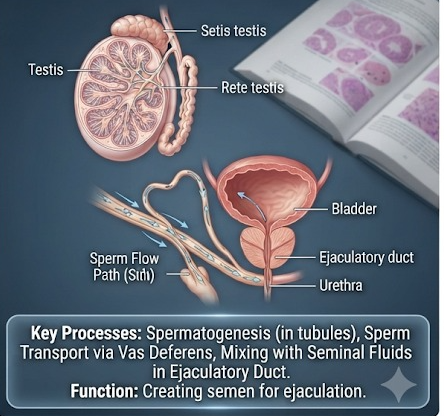
Internal Parts of the Male Reproductive System
3. Testicles (Testes)
The testicles are two oval-shaped organs located inside the scrotum. They perform two essential functions:
- Produce sperm cells
- Produce testosterone hormone
Testosterone is responsible for male physical characteristics such as deeper voice, facial hair, muscle growth, and sexual development during puberty.
4. Epididymis
Each testicle has a long, tightly wound tube called the epididymis linked to its back.
After sperm are produced in the testes, they move into the epididymis where they mature and gain the ability to swim. Mature sperm remain stored here until ejaculation.
5. Vas Deferens
The vas deferens is a muscular tube that transports mature sperm from the epididymis toward the urethra.
During ejaculation, rhythmic muscle contractions push sperm through the vas deferens, allowing them to mix with fluids from other reproductive glands before leaving the body.
6. Seminal Vesicles
The seminal vesicles are two glands located behind the bladder. They produce a nutrient-rich fluid containing fructose, which provides energy for sperm.
This fluid makes up a large portion of semen and helps sperm survive longer after ejaculation.
7. Prostate Gland
The prostate gland lies just below the bladder and surrounds part of the urethra.
It produces a slightly alkaline fluid that protects sperm from the acidic environment of the female reproductive tract. This fluid also improves sperm mobility, increasing the chances of successful fertilization.
8. Bulbourethral (Cowper’s) Glands
These small glands are located below the prostate gland.
Before ejaculation, they release a clear lubricating fluid that helps neutralize any acidic urine remaining in the urethra. This creates a safer pathway for sperm during ejaculation.
9. Urethra
The urethra is a tube that passes through the penis.
It serves two important functions:
- Carries urine from the bladder.
- Transports semen during ejaculation.
Special muscles ensure that urine and semen do not pass through the urethra simultaneously.
How the Male Reproductive System Works
The male reproductive system functions through a coordinated process. First, the testes continuously produce sperm and testosterone. The sperm mature inside the epididymis before traveling through the vas deferens during ejaculation. Along the way, fluids from the seminal vesicles, prostate gland, and bulbourethral glands combine with sperm to form semen. Finally, semen exits the body through the urethra during ejaculation.
This entire process is carefully controlled by hormones released from the brain and the testes.
Importance of Maintaining Male Reproductive Health
Maintaining a healthy reproductive system contributes to fertility, hormone balance, and overall well-being. Some simple ways to support reproductive health include:
- Eat a balanced, nutrient-rich diet.
- Exercise regularly.
- Avoid smoking and excessive alcohol consumption.
- Practice good personal hygiene.
- Protect against sexually transmitted infections (STIs).
- Schedule regular medical check-ups, especially after age 40.
Early detection of reproductive health issues can improve treatment outcomes and help preserve fertility.
Understanding the male reproductive system parts is essential for learning how the human body supports reproduction and hormone production. From the testicles that produce sperm and testosterone to the prostate gland, seminal vesicles, vas deferens, and penis, every organ performs a unique role in reproductive health. By adopting healthy lifestyle habits and seeking regular medical care, men can maintain optimal reproductive function and overall wellness throughout their lives.
How to Choose the Best Online Courses for Career Advancement
Exploring the Top Scientific Theories That Changed the World