Boiling eggs may seem simple, but getting the perfect texture—whether soft, medium, or hard-boiled—requires precise timing. If you’ve ever struggled with undercooked yolks or overcooked eggs with a greenish ring, this guide will help you master the process. Let’s explore exactly how long to boil eggs for the best results every time.
Why Boiling Time Matters
The boiling time directly affects the texture of both the egg white and the yolk. Eggs cook from the outside in, so even a difference of one or two minutes can change the outcome significantly. Whether you prefer a runny yolk or a firm center, timing is everything.
How Long to Boil Eggs (Based on Doneness)
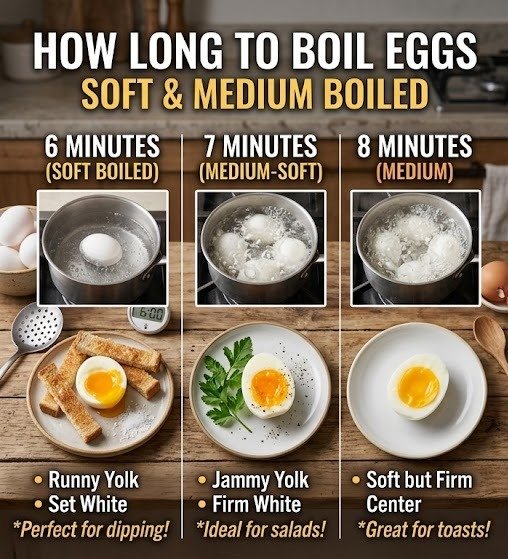
Here’s a simple breakdown of boiling times depending on how you like your eggs:
Soft-Boiled Eggs (Runny Yolk)
- Boiling time: 4 to 6 minutes
- Texture: Firm whites with a liquid, runny yolk
- Best for: Toast, ramen, or breakfast bowls
Medium-Boiled Eggs (Jammy Center)
- Boiling time: 7 to 9 minutes
- Texture: Fully set whites with a slightly soft, creamy yolk
- Best for: Salads or quick snacks
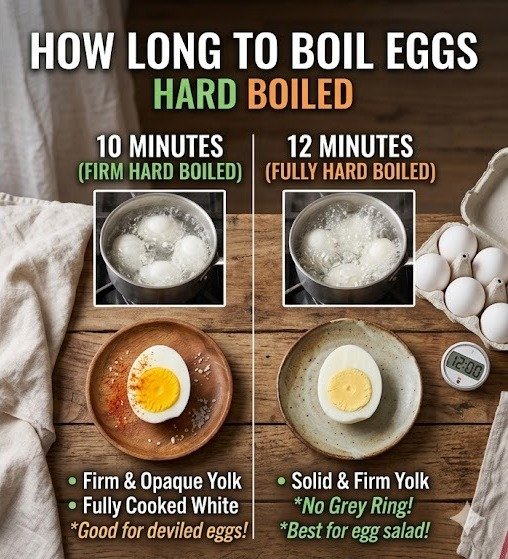
Hard-Boiled Eggs (Fully Cooked)
- Boiling time: 10 to 12 minutes
- Texture: Firm whites and fully cooked yolks
- Best for: Sandwiches, meal prep, or deviled eggs
Step-by-Step Guide to Boiling Eggs
Follow these simple steps to get perfectly boiled eggs every time:
1. Place Eggs in a Pot
Place the eggs in a saucepan in a single layer. Avoid stacking them to prevent cracking.
2. Add Water
Add enough water to the pot to cover the eggs by around an inch.
3. Bring to a Boil
Heat the pot on medium-high until the water reaches a rolling boil.
4. Turn Off Heat & Cover
Once boiling, turn off the heat, cover the pot, and let the eggs sit in the hot water based on your preferred doneness.
5. Transfer to Ice Bath
Immediately move the eggs to a bowl of ice water. This halts the cooking process and facilitates peeling.
Tips for Perfect Boiled Eggs
Use Slightly Older Eggs
Fresh eggs are harder to peel. Eggs that are a few days old work better for boiling.
Don’t Skip the Ice Bath
Cooling eggs quickly prevents overcooking and helps avoid the green ring around the yolk.
Add a Pinch of Salt or Vinegar
This can help prevent egg whites from leaking if a shell cracks during boiling.
Peel Under Running Water
This makes removing the shell smoother and quicker.
Common Mistakes to Avoid
- Overcooking Eggs: Leads to dry yolks and a sulfur-like smell
- Boiling Too Rapidly: Can cause eggs to crack
- Skipping Timing: Guesswork often results in inconsistent textures
How to Store Boiled Eggs
- Refrigerator: Store boiled eggs in the fridge for up to 7 days
- With Shell On: Keeps them fresher longer
- Without Shell: Store in an airtight container and consume within 2–3 days
Knowing how long to boil eggs is a simple but essential kitchen skill. Whether you prefer a soft, creamy yolk or a fully cooked center, following the right timing and method makes all the difference. With a little practice and attention to detail, you’ll be able to prepare perfectly boiled eggs every single time.
Now that you know the exact boiling times and techniques, you can confidently enjoy eggs just the way you like them—perfectly cooked and delicious.
Effects of AI in Upcoming Technology
Manhole – Essential Access Points in Urban Infrastructure
RCPC Manhole Covers and Frames
Read Also: Social Network Website Design